Expert A Level Economics Tutors
One-to-one subject specialists in person across London and online worldwide, handpicked for your child's exam board.
Prefer to speak to someone?
Call us: +44 (0)207 736 6977- Tutors for AQA, Edexcel and OCR
- Handpicked by our education team and matched within days
- Students placed at Oxford, Cambridge, Imperial, LSE, KCL and Durham
Speak to our education team
Tell us what your child needs and we'll come back with a shortlist of suitable tutors.
We reply to every enquiry within one working day. See our privacy policy.


Meet Our A Level Economics Tutors
Our A Level Economics tutors are subject specialists with years of sixth-form teaching behind them. Many read Economics, PPE or a related discipline at leading universities including Oxford, Cambridge and LSE; several are qualified teachers, some hold doctorates in economics or finance, and a number have examining experience. Every tutor is selected individually through a rigorous vetting process, and only a small proportion of applicants join us.

Dr Meghna
University Admissions SpecialistMegnha holds a PhD in Business and Finance from King’s College London, an MSc in International Financial Management (Distinction) from Queen Mary University of London, and a BA (Ho...

Michael
University Admissions SpecialistMichael specialises in A Level Economics, with a proven track record of securing outstanding A*/A results that consistently exceed both national and school averages. His teaching c...

Liliya
University Admissions SpecialistShe graduated from the London School of Economics with a degree in International Relations, where she received the LSE100 Outstanding Achievement Award (top 2% of the cohort), and ...

Alex
University Admissions SpecialistAlex studied PPE at Oxford himself, with a range of experience navigating university admissions and supporting tuition at KS4 and KS5. This ranges from helping students choose a co...

Darya
Secondary Education, University level studies, GCSE Specialist, A Level SpecialistDarya has over seven years of tutoring experience. One of her key strengths is making Maths “click,” reducing the degree of abstraction, making complex concepts easier to understan...

Naomi
International Baccalaureate Diploma Program, GCSE and A-Level SpecialistNaomi is an experienced teacher and tutor who specialises in the IB diploma programme, Sixth Form and Secondary education. She has spent the last thirteen years educating students ...
Hand-Picked Tutors For Your Personal Needs
Unlike maths or science, economics isn't a subject you can get full marks in through knowledge alone, and many students struggle with what is often a brand-new subject and, with it, the way to apply learned knowledge to get full marks. That's where Ivy Education's expert tutors come in.
We help students who are:
Stuck in the middle band on essays
Knowledge marks come easily and then the grade plateaus. Almost always the missing piece is evaluation: weighing an argument and reaching a judgement rather than listing both sides.
Applying to LSE, Oxbridge or Warwick
The strongest Economics departments ask for A*AA or higher and most also set an admissions test, which is a separate discipline from the A Level itself.
Strong in one half, weak in the other
Plenty of students are comfortable with micro and lost in macro, or the reverse. Because the papers are split that way, one weak half caps the whole grade.
New to the subject in Year 12
Most students start Economics from scratch at A Level, with no GCSE behind them. The first term is a genuine step change, and falling behind early is easy.
Whatever the goal, your family is not working it out alone.
We will find the right tutor and stay involved right through to results day.
Microeconomics and Macroeconomics
Every board splits A Level Economics into two halves with two papers to take, and to get a good overall grade, you need to get strong marks in both.
Microeconomics looks at how individual markets allocate resources, where they fail, and what governments can do about it. Macroeconomics looks at the economy as a whole — growth, inflation, unemployment, trade and policy. Most students find one of the two considerably more intuitive than the other, and because each has its own paper, a weakness on one side puts a firm ceiling on the overall grade. The first thing a good tutor establishes is where you are losing marks and why.
Send us a marked essay and we will tell you what is capping the grade.
Knowledge, application, diagrams or evaluation — the fix is different in each case, and identifying which one it is takes a specialist about twenty minutes.
A Level Economics and University Admissions
Economics is among the most oversubscribed degree subjects in the country, and for the leading departments, such as ones for LSE, UCL, and Oxbridge, the A Level grade is only part of what gets a student shortlisted.
Most of the strongest Economics courses now set a separate admissions test, sat in the autumn of Year 13 alongside a full A Level timetable. None of them are simply harder Economics papers — they test mathematical reasoning or critical thinking, largely independent of the specification content, and students who meet them cold in September are usually surprised by how different they feel. We run dedicated preparation for each, and can join it up with A Level tuition and the wider application where a student needs more than one.
Beyond the A Level
TMUA
The Test of Mathematics for University Admission is used in shortlisting for Economics at several leading universities. Paper 1 tests mathematical knowledge in context; Paper 2 tests logical reasoning and the evaluation of mathematical arguments, which is not A Level territory at all and catches most students out.
TMUA tuition →TARA
TARA has replaced the TSA as Oxford's admissions test for Economics and Management, PPE, History and Economics and related courses, and UCL uses it for several social science courses. It tests critical thinking, problem solving and a written reasoning task, with no Economics content at all.
TARA tuition →Applications and interviews
For the most competitive departments the test is only one component. Personal statements, wider reading beyond the specification and interview technique all carry weight, and Oxbridge Economics interviews in particular ask students to reason aloud through problems they have never seen.
Economics admissions →Exam Boards and Specifications
Let us know what exam board your child is taking, and we will match them with a tutor that understands the intricacies of that board. Our tutors are experts at all exam boards, including the ones below:
AQA (7136)
Three two-hour papers of 80 marks each, weighted equally. Paper 1 is Markets and market failure, Paper 2 is The national and international economy, and Paper 3, Economic principles and issues, opens with thirty multiple choice questions drawn from the entire course before moving to a case study. That multiple choice section rewards a different kind of preparation from the essays.

Pearson Edexcel A (9EC0)
The theory-led Edexcel route and the one most schools teach, built around four themes — two micro, two macro. Three two-hour papers of 100 marks: Markets and business behaviour, The national and global economy, and a synoptic third paper combining both. Papers 1 and 2 each run multiple choice, a compulsory data response and a choice of extended essay.
OCR (H460)
Three papers split as microeconomics, macroeconomics and a third synoptic paper on themes in economics. OCR places particular emphasis on quantitative skills and on applying theory to unfamiliar contexts, so students on this route benefit from practice with the specific question styles rather than generic essay work.
Pearson Edexcel B (9EB0)
A separate qualification from Economics A, not a variant. It teaches the same core theory through the lens of real businesses and markets, with a more applied feel throughout. The content overlap is high but the papers are different, and a student on Economics B who revises with Economics A resources will be practising the wrong exam.
IB Economics and international routes
We also tutor IB Economics at both Standard and Higher Level, including the internal assessment commentaries, and Cambridge International (CAIE) A Level Economics. These follow different content and assessment structures from the UK A Level, so preparation is planned around the specification the student is actually sitting.
Not sure which specification your child is taking?
Edexcel alone runs two separate Economics qualifications. Tell us your child's school when you enquire and we will establish which route they are on, then match a tutor who teaches it every week.
A Level Economics Tuition: Online and In-Person
We provide one-to-one online A Level Economics tuition to families across the UK and internationally.
We are based in Fulham and can provide in-person tutors across West, South-West and Central London. A Level Economics also works particularly well online: lessons run over video with a shared whiteboard, so tutor and student can build an AD/AS diagram together, work through a set of data extracts line by line, or plan the structure of a 25-mark answer before a word of it is written.
Between sessions, students can submit full essays and past-paper answers for marking against the real mark schemes. That matters more in Economics than in almost any other subject: the difference between a level 3 and a level 5 answer is rarely about knowledge, and students very often cannot see it in their own writing until someone shows them. Online tuition also widens the pool considerably — your child is matched with the strongest available specialist for their board and their target grade, wherever that tutor happens to be.

Get in touch with our Family Education Team
Whether your child needs help with micro, macro, data response or essay technique, a quick chat is all we need to find the right tutor for them.
How We Pick Your Perfect A Level Economics Tutor

Our dedicated team will provide a personalised experience for your family.
In our initial discussion, we take the time to understand your student: their school and exam board, where they are in the two-year course, their most recent mock, their target grade, whether micro or macro is the weaker half, and which universities they have in mind. We will then begin a thorough search on your behalf.

We will select the tutor best suited to your child, both academically and personally.
Equipped with a clear picture of your student's needs, we approach the A Level Economics specialists we believe would be the strongest fit, weighing their availability, degree background, examining and sixth-form teaching experience, manner and approach before deciding who to shortlist.

Our Education Team will introduce you to your handpicked tutor.
We send over a shortlist with everything you need to make an informed decision. If you would like further guidance on which tutor would suit your child best, our experts are always reachable by phone or email and are delighted to advise.

Your tutor will create a bespoke A Level Economics plan.
In the first sessions, your student's tutor works through a diagnostic across the specification and marks a full written answer, because in Economics the gap is usually between what a student knows and what they put on the page. From there they build a plan by topic and by skill, covering content, diagrams, data response and evaluation technique, reviewed regularly against past-paper performance so progress is visible rather than assumed.

You will receive regular check-ins with our Client Services Team.
From the first lesson through to results day, we stay in touch to make sure the quality and momentum of the tuition are consistent, and that the family, the student and the tutor are all happy with the arrangement.
FAQs
Free A Level Economics Resources
If you need help with your A Level Economics revision, check out our free exam guides, revision guides and other resources below.

A Level Results 2026 Analysis
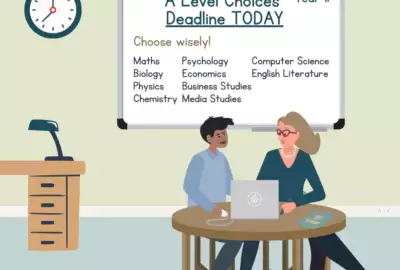
Hardest A Levels 2027
What makes an A Level hard may depend on individual factors such as a natural aptitude, a preference for certain subjec...

What are A-levels?
Transitioning from the realm of GCSEs to the next stage —A Levels— becomes a critical milestone for UK students aspirin...

A Level Grades Explained
Understanding A Level grades is crucial for students aiming to navigate their educational journey effectively and maximi...
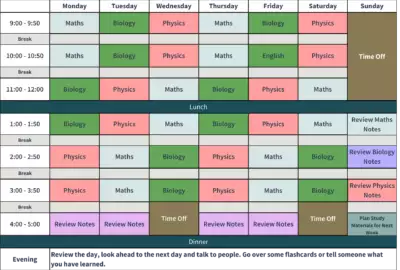
Free A Level Revision Timetable Template
A good revision timetable will ensure you have a plan to cover all the topics you need to cover. You will have been stud...

A Complete Guide to Every A Level Exam Board
Choosing the right A-Level exam board can significantly influence a student’s academic journey. While all boards adhere ...
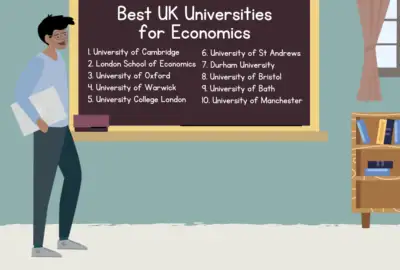
Best Universities for Economics in the UK for 2026
Choosing where to study economics in the UK can be difficult. With so many highly regarded universities offering excelle...