Expert Guidance for School Interviews
One-to-one preparation led by former Heads and senior school leaders who have interviewed thousands of candidates.
The interview is where school entry is often decided. At 11+, most leading independent schools interview candidates after the ISEB Pre-Test or entrance exams, and many now place as much weight on the interview as on the papers. At 16+, sixth form entry is arguably the most competitive point of all, with a small number of external places and academic interviews that regularly decide between strong candidates. At 7+, the assessment morning may be the first formal conversation a child has ever had with an unfamiliar adult.
At Ivy Education, our interview preparation is conducted by former Heads of top independent schools. These are the people who sat on the other side of the desk, interviewing candidates and deciding who received offers. Students prepare with experts who know exactly what schools are looking for because, for years, they were the ones making the decisions.

Brodie
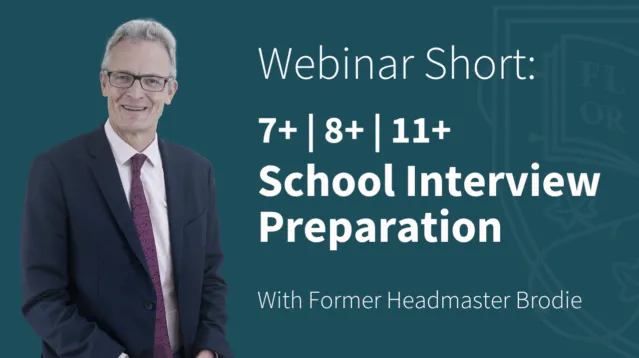
Schools Consultant"Brodie, Former Headmaster of North Bridge House Prep School and Deputy Head of Westminster Under School. Across a thirty-year career in school leadership, Brodie interviewed and placed over a thousand children into schools across London and the UK, and he knows first-hand what admissions staff are looking for in the room. He now prepares Ivy students for interview one-to-one, drawing on that experience to help each child listen well, think under pressure and speak with confidence."
Past roles and experience

Headmaster of North Bridge House Prep School

Deputy Head of Westminster Under School
Our Structured Interview Preparation Process
Building the Foundations of a Confident Interview
Our preparation begins with a clear understanding of the schools a student is applying to, the entry point they are targeting, and the interview format they are likely to face, from the group activities and assessment mornings used at 7+ and 11+ to the searching academic interviews used for sixth form entry.
Sessions focus on the skills that strong candidates share: the ability to talk about their interests with warmth and detail, to think out loud when a question is unfamiliar, to hold a natural conversation with an adult they have never met, and to listen well. Students practise discussing their reading, their subjects and their wider interests, and learn to give full, honest answers rather than the rehearsed lines interviewers see through immediately.
Realistic Mock Interviews with Former Heads
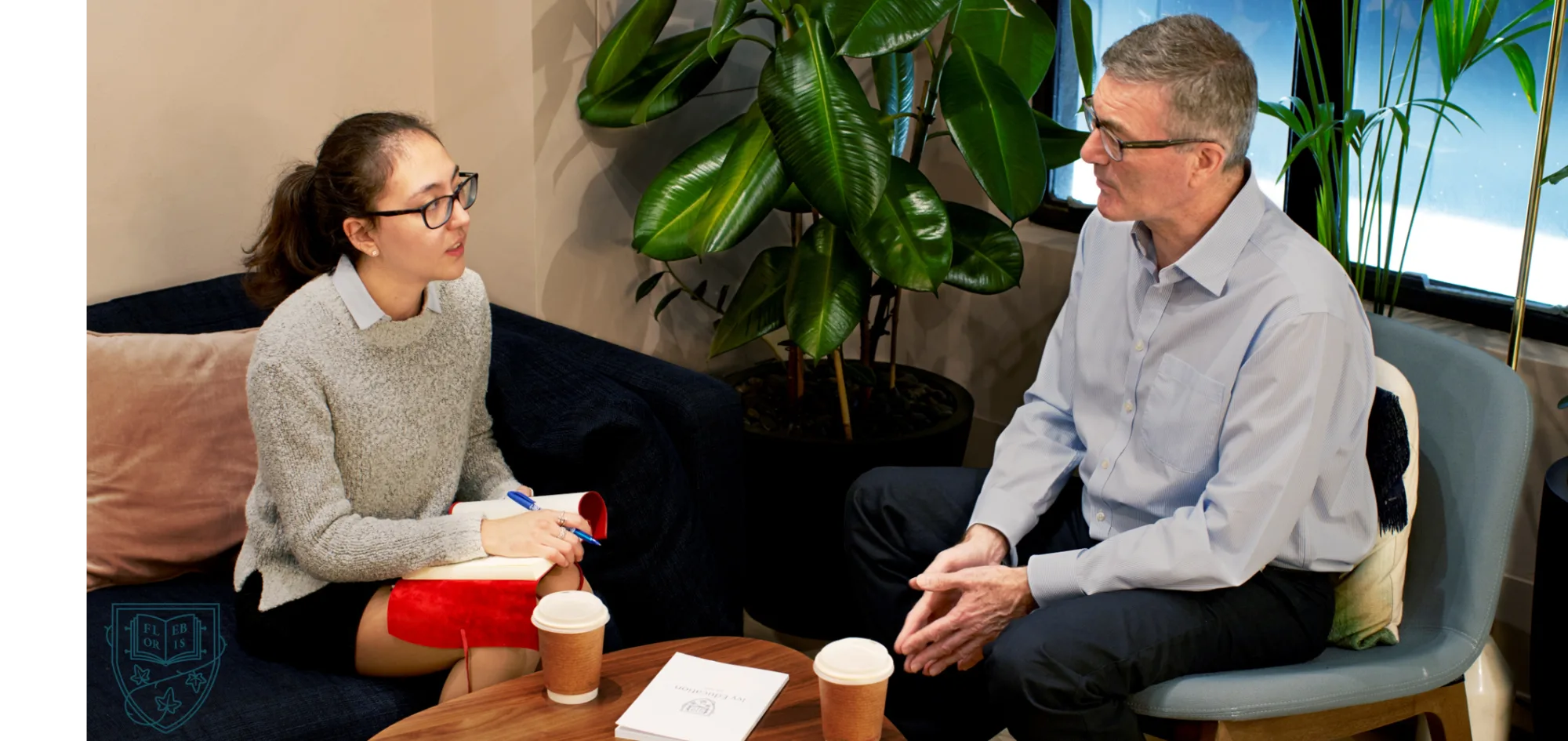
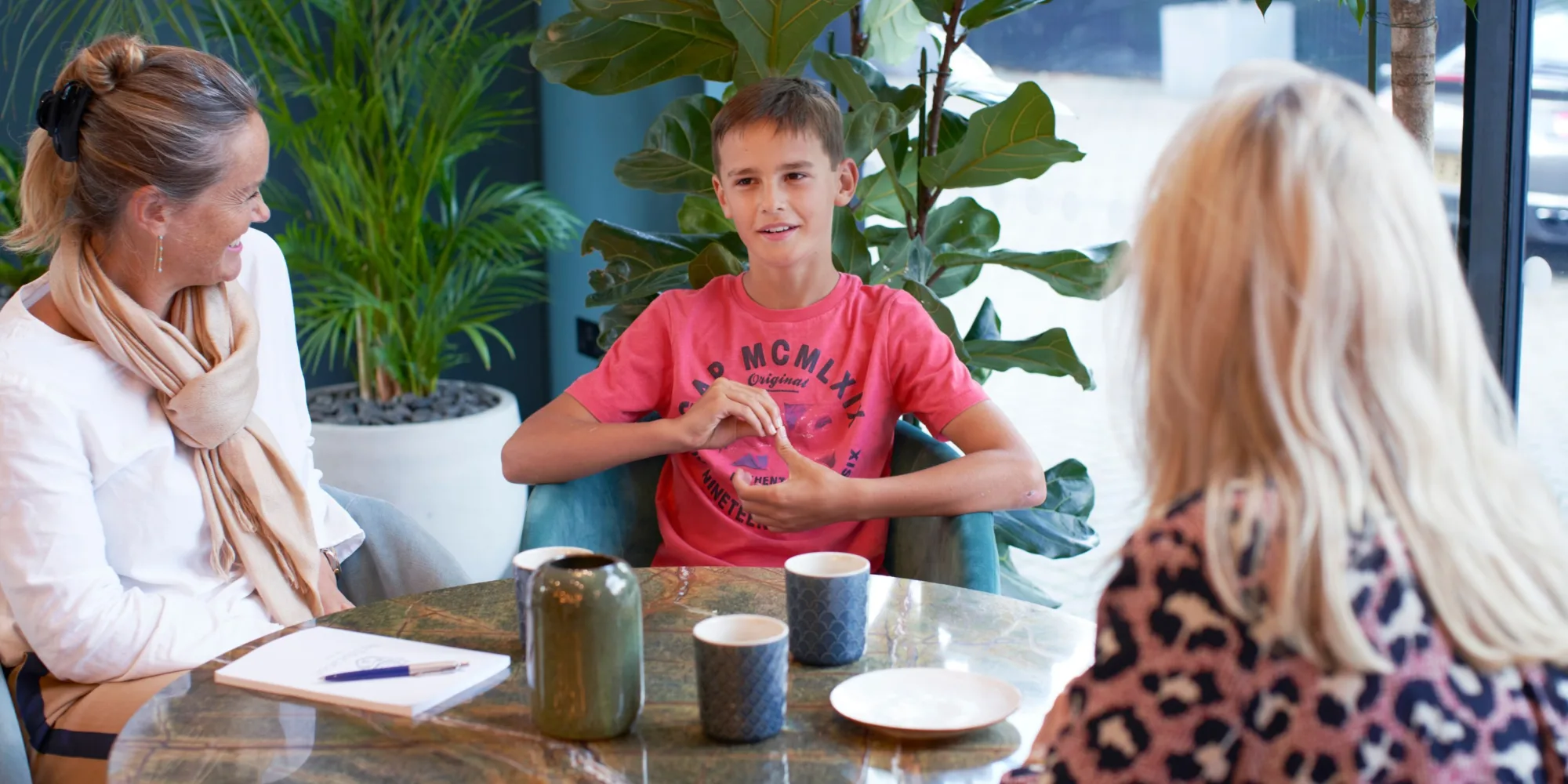
As students progress, sessions move toward full mock interviews conducted by a former Head of a top independent school. Each mock replicates the tone, length and style of the real thing, tailored to the target school, and is followed by verbal feedback and a written report covering content, communication, body language and presence.
Through this cycle of practice, feedback and refinement, students arrive at their real interviews calm and at ease. They have already sat opposite a Head and held their own, so the interview day feels familiar rather than frightening.
Interview Preparation for Every Entry Point
The interview looks different at each stage. Our preparation is tailored to the specific format, tone and expectations of the entry point your child is applying for.
7+ Interview Preparation
At 7+, most schools assess children through a combination of short written tasks, group activities and a gentle one-to-one conversation. Assessors watch how children listen, share, follow instructions and interact with adults and other children…
At 7+, most schools assess children through a combination of short written tasks, group activities and a gentle one-to-one conversation. Assessors watch how children listen, share, follow instructions and interact with adults and other children. There are no trick questions; the day is designed to see what a child is like and whether they will settle happily into the school.
Preparation at this age is about familiarity and confidence. Our consultants help young children feel comfortable talking to an unfamiliar adult, taking turns in a group, and showing their natural curiosity, so that the assessment morning feels friendly and familiar rather than daunting.
11+ Interview Preparation
The 11+ interview is a key part of entry to almost every leading independent day school, and at many it carries as much weight as the entrance papers. Shortlisted candidates are usually interviewed after the ISEB Pre-Test or written examinations…
The 11+ interview is a key part of entry to almost every leading independent day school, and at many it carries as much weight as the entrance papers. Shortlisted candidates are usually interviewed after the ISEB Pre-Test or written examinations, in a one-to-one conversation with the Head or a senior teacher, and sometimes in a small group or activity session as well.
Interviewers want to meet a curious, engaged child who will contribute to school life. Questions cover reading, hobbies, current interests, why the child wants to join the school, and often a puzzle, a picture or a short passage to discuss, to see how a child thinks when there is no right answer. Our preparation helps children talk about themselves naturally, structure their thoughts without sounding rehearsed, and treat the interview as a conversation to enjoy.
13+ Interview Preparation
13+ is the main entry point to many senior and boarding schools, particularly for boys, at schools such as Eton, Winchester and Harrow. Although children join in Year 9, the assessment happens much earlier, often when a child is only ten or eleven…
13+ is the main entry point to many senior and boarding schools, particularly for boys, at schools such as Eton, Winchester and Harrow. Although children join in Year 9, the assessment happens much earlier: most schools now use the ISEB Common Pre-Test in Year 6 or Year 7, and interviews often take place at that same stage, when a child is only ten or eleven. Interviews are longer and more academically probing than at 11+, exploring how a child thinks, what they read and what genuinely interests them.
13+ also serves as a valuable second opportunity. Children who narrowly miss an offer at 11+, or who are placed on a waiting list, can often reapply for 13+ entry to the same or similar schools, and occasional places come up at this stage too. Whether your child is aiming at 13+ as their main route or as a second attempt, our preparation follows the same approach, with mock interviews tailored to each target school.
16+ Interview Preparation
Sixth form entry is the most competitive point of admission to many independent schools. External places are limited, and the interview, which at this level is academic in nature, is often decisive between strong candidates…
Sixth form entry is the most competitive point of admission to many independent schools. External places are limited, applications far outnumber them, and offers are typically conditional on strong GCSE results. Shortlisted candidates sit subject papers in their intended A Level or IB subjects and attend an interview, which at this level is academic in nature and often decisive; strong candidates on paper are regularly separated by how they perform in the room.
At 16+, interviews test intellectual curiosity and readiness for the independence of sixth form study. Students can expect to discuss why they have chosen their subjects, what they read and think about beyond the syllabus, their wider interests and ambitions, and how they engage with ideas and views different from their own. Some schools include critical-thinking or problem-solving discussion, or ask candidates to respond to unseen material. Interviewers are looking for genuine engagement and clear thinking, not rehearsed answers.
Our 16+ preparation, conducted by former Heads and senior school leaders, gives students realistic academic interview practice, helps them articulate their subject interests with confidence, and prepares them to discuss their reading and ideas at the level sixth form interviewers expect. We can also support the wider application, including personal statements and school selection, through our School Consultancy team.
How Should Students Prepare for a School Interview?
Schools are not looking for polished, adult answers; they want to meet the real student.
Independent schools use interviews to understand what a student is like: whether they are curious, whether they will throw themselves into school life, and whether they will be a thoughtful, engaged member of the community. At 11+ this means talking easily about books, hobbies and ideas; at 16+ it means showing genuine intellectual appetite for the subjects a student has chosen to pursue.
The best preparation does not script responses. It gives students the confidence and the conversational habits to be themselves in an unfamiliar setting. Our consultants help each student find the subjects they light up talking about, structure their thoughts without sounding rehearsed, and treat the interview as a conversation rather than a test to survive.
Interviews by Former Heads at Top Independent Schools
Students will be interviewed by admissions specialists with years of experience, from 7+ to Sixth Form.
Most interview preparation is delivered by tutors. Ours is different. Every Ivy mock interview is conducted by a former Head of a leading independent school, someone who has personally interviewed hundreds of candidates and made the final decisions on offers. They know the difference between a coached answer and a real one, which questions reveal character, and what tips a borderline candidate into an offer. At 16+, where interviews are academic and places are scarce, that insight is decisive.
For students, sitting opposite a former Head is the closest possible rehearsal for the real thing. For parents, the feedback that follows is unlike anything a tutor can provide: an honest, experienced assessment of how their child will come across to the person making the decision.
Schools We Help Prepare Students For
We have a strong track record of supporting students through interviews at the UK's most competitive independent schools and sixth form colleges.
King's College School Wimbledon
KCS Wimbledon is an independent day school for boys aged 7-18 and girls aged 16-18, located in Wimbledon, London. All entry points are competitive and require an exam and interview. KCS is known for its peaceful environment and strong sense of community.
City of London School
City Junior School, part of the City of London School, is a co-educational day school located in central London. It admits pupils at 7+ and 11+ and offers a broad curriculum designed to prepare students for senior school education. It provides a strong academic ethos and excellent facilities while maintaining its own distinct identity and campus.
Westminster School
Westminster School, a public day and boarding school in Westminster, London, admits boys at 13+ and girls at 16+. It is affiliated with Westminster Under School, a day school for boys admitting pupils at 7+, 8+, and 11+. The Under School has its own campus.
Latymer Upper School
Latymer Upper School, located in Hammersmith, London, is a co-educational independent day school. It admits pupils at 11+ and 16+, offering a broad and rigorous curriculum designed to prepare students for higher education and beyond. The school maintains a strong academic ethos and provides excellent facilities, including modern science laboratories, a performing arts centre, and extensive sports amenities, all while preserving its distinct identity and campus.
St Paul’s School
St Paul's School is a leading independent school for boys, aged 7-18. It is located in Barnes, West London. St Paul's School provides boys with a dynamic, varied and enriching education from the age of 11 until 18. All entry points require a competitive exam and an interview, and boys join St Paul’s Juniors for two years and then transfer to St Paul’s.
Eton College
Eton College is an independent boarding school for boys, ages 13-18, located in Berkshire, England. It was founded in 1440 and has a notable history. All boys must sit the ISEB Common Pre-Test. Successful candidates will be invited for an individual interview and an online predictive test. Candidates are then offered a conditional place, confirmed by passing a final assessment in Year 8.
Get in touch to start the process
Speak to a consultant about school interview preparation and admissions support.
Our School Tutoring Services
Many students preparing for school interviews also benefit from targeted support with entrance examinations, subject papers and school selection. We therefore offer specialist services designed to strengthen every stage of the application:
Interview Advice and Guidance
In-depth articles to support students through the school interview process
25 Frequently Asked School Interview Questions
The 11 Plus interview is a critical step in the admissions process for many independent and grammar schools. This interv...

School Entrance Interview Preparation with Brodie Bibby
“Would you rather have a bath in jelly or in baked beans?” School entrance interview preparation with Brodie Bibby As a ...

A Guide to Interview Prep for Postgraduate Courses
Postgraduate interviews can feel like a step into the unknown, especially if you have not faced an academic interview si...
Alleyn's School 11+ Admissions Guide
Alleyn’s School is one of London’s leading co-educational independent schools, located in the heart of Dulwich. Renowned...
Latymer Upper School 11+ Admissions Guide
Latymer Upper School, situated in Hammersmith, London, is one of the UK’s leading co-educational independent schools, re...

Godolphin and Latymer School 11+ Guide
Latymer Prep School, located in Hammersmith, London, is one of the UK’s most respected co-educational preparatory school...

The 11 Plus (11+) Guide: Everything You Need to Know
If you're navigating the educational path of your child, you've likely heard of the 11 Plus exam. This guide is your gat...

King's College School Wimbledon 11+ Admissions Guide
King’s College School (KCS) Wimbledon is one of the top independent schools in the UK, consistently ranking among the be...

11+ Guide to James Allen’s Girls’ School (JAGS)
James Allen’s Girls’ School (JAGS) is one of the UK’s most prestigious independent girls’ schools, located in Dulwich, L...

St Paul's Girls' School 11+ Entry: An Ultimate Guide
Each year, a significant number of students apply for the 11+ entry at SPGS, competing for a limited number of places. T...
Westminster School 11+ Entrance Guide: Everything You Need to Know
Westminster School is one of the UK's most prestigious independent schools, offering an exceptional education for studen...