
Expert A Level Maths Tutors
One-to-one Maths and Further Maths tutors in person across London and online worldwide, handpicked for your child's exam board.
Prefer to speak to someone?
Call us: +44 (0)207 736 6977- Tutors for AQA, Edexcel, OCR A and OCR B (MEI)
- Handpicked by our education team and matched within days
- Students placed at Oxford, Cambridge, Imperial, LSE, KCL and Durham
Speak to our education team
Tell us what your child needs and we'll come back with a shortlist of suitable tutors.
We reply to every enquiry within one working day. See our privacy policy.





Meet Our A Level Maths Tutors
Our A Level Maths tutors are subject specialists with years of sixth-form teaching behind them. Many hold degrees in Mathematics, Engineering, Physics or Economics from leading universities; several are qualified teachers, and some have examining experience. Every tutor is selected individually through a rigorous vetting process, and only a small proportion of applicants join us.

Sandip
Maths GCSE & A Level SpecialistOver the course of completing his PhD at King’s College London, Sandip gained a lot of experience in helping students across the Sciences, Arts and Humanities. Sandip aims to encou...

Saskia
University Admissions SpecialistSaskia is passionate about helping students identify the right post-school path for them and working with them to develop the skills needed for a successful application. She brings...

Jacob
GCSE & A Level Maths SpecialistHe particularly enjoys using real-world examples to both help understanding of a concept or to enable tutees to gain insight into why particular aspects of taught subjects are impo...

Dr Shreema
University Admissions SpecialistWith an exceptional academic background including a BSc in Biological Chemistry, an MRes in Clinical Drug Development, and a PhD in Oncology, she brings deep subject expertise and ...

Tom
GCSE & A Level Specialist Tutor - Maths and PhysicsAs a Cambridge graduate with a distinction in his PGCE, Thomas brings both expertise and enthusiasm to his sessions. He is known for being patient and understanding of the unique l...

Ayman
University Admissions SpecialistAyman combines strong academic excellence with over 300 hours of tutoring experience across GCSE, A Level, and university application preparation, working with both private clients...

Ashvin
University Admissions SpecialistHe specialises in Biology, Chemistry, Mathematics, and Physics, supporting students from 7+ through to A Level and IB. Ashvin has extensive experience preparing students across all...

Mark
GCSE & A Level SpecialistMark specialises in guiding students through the middle and senior school years, including entrance tests at 11+ and 13+, GCSEs, A-levels and IB, with a focus on English, Maths and...

Dr Meghna
University Admissions SpecialistMegnha holds a PhD in Business and Finance from King’s College London, an MSc in International Financial Management (Distinction) from Queen Mary University of London, and a BA (Ho...
Hand-Picked Tutors For Your Personal Needs
A Level Maths is the biggest step up most students make in any subject, and students coming into sixth form with a grade 8 or 9 in their GCSEs can sometimes find themselves struggling with the new syllabus. That's where Ivy Education comes in.
We help students who are:
Struggling with the jump from GCSE
Strong GCSE grades do not automatically carry into Year 12. The difficulty mounts quickly, and some students fall behind without realising and need extra support to get them back up to speed.
Chasing an A or A* for a firm offer
Competitive courses in Maths, Engineering, Economics, Physics and Computer Science routinely ask for A*A*A or A*AA, and Maths is almost always the A* they want.
Losing marks in Statistics or Mechanics
Students who are comfortable in Pure Maths often find that the applied papers have content that does not come as naturally to them, is taught faster, and is revised less due to a lack of confidence.
Considering dropping the subject
Every year, capable students give up Maths in Year 12 after one bad module or a disappointing mock. Often the problem is easily identifiable, and once it is, they are much more confident in tackling the remainder of the course.
Whatever the goal, your family is not working it out alone.
We will find the right tutor and stay involved right through to results day.
A Level Maths or Further Maths: We Tutor Both
Two qualifications, taught side by side, with very different demands. Our tutors teach both, and will pinpoint where your child is losing marks on their specific course.
Unlike GCSE, the content of A Level Maths is set nationally, so every board teaches the same core material. What differs is how it is split across the papers and how questions are worded. Further Maths is a separate, additional A Level taken alongside it, usually by students heading for Maths, Engineering, Physics or Computer Science at a competitive university. If you are not sure which course your child is taking, or whether Further Maths is worth adding, we can talk it through.
A Level Mathematics
Roughly two-thirds of the course is Pure Mathematics, with the remaining third split between Statistics and Mechanics. Every student sits all three papers at the end of Year 13.
Our tutors work through the specification topic by topic, pinpoint exactly where marks are being lost, and rebuild the underlying methods needed to close those gaps efficiently. This is far more effective than simply retaking past papers without guidance — a common strategy among students who are unsure how best to improve.
Further Mathematics
Taken alongside A Level Maths and taught at the same time, Further Maths introduces complex numbers, matrices, proof by induction, polar coordinates, hyperbolic functions and differential equations, plus optional routes in further pure, statistics or mechanics chosen by the school.
It assumes the whole of the standard A Level, so weak calculus or algebra shows up immediately. Our tutors support both qualifications together, which is usually more efficient than treating them as separate problems.
What we cover
Proof and Algebraic Methods
Proof by deduction, exhaustion, contradiction and counter-example, alongside indices, surds, quadratics, simultaneous equations, inequalities, polynomials and partial fractions. Algebra is the foundation on which the rest of the course is built, and it is often a common source of dropped marks in unrelated topics.
Functions, Graphs and Coordinate Geometry
Domain and range, composite and inverse functions, modulus, graph transformations, straight lines, circles and parametric equations. Students who can sketch confidently tend to spot the route through a problem far faster than those working purely algebraically.
Sequences and Series
Arithmetic and geometric sequences, sigma notation, sums to infinity, recurrence relations and the binomial expansion, including expansions valid only for a given range. Reliable marks when the conditions and notation are properly understood.
Trigonometry
Radians, arc length and sector area, the reciprocal and inverse functions, identities, the compound and double angle formulae, the R-formula and solving equations over a given interval. A topic where students routinely lose marks by missing solutions rather than by not knowing the method.
Exponentials and Logarithms
The exponential function, natural logarithms, laws of logs, solving exponential equations, and using log-linear graphs to fit models to experimental data. Frequently examined in modelling contexts, where interpreting the answer matters as much as finding it.
Differentiation
First principles, the chain, product and quotient rules, implicit and parametric differentiation, connected rates of change, stationary points and points of inflection. Along with integration, this is where the largest share of Pure marks sits.
Integration and Differential Equations
Standard integrals, substitution, integration by parts, partial fractions, areas under and between curves, and forming and solving first order differential equations. Students who are secure in differentiation often still find integration harder, because it requires choosing a method rather than applying one.
Vectors and Numerical Methods
Vectors in two and three dimensions, magnitude, direction and geometric problems, alongside change of sign, iteration, the Newton-Raphson method and the trapezium rule. Two of the smaller topics on the specification, and two that reward students who have actually revised them.
Statistics
Sampling methods, data presentation and interpretation, correlation and regression, probability, the binomial and normal distributions, and hypothesis testing. Every board sets a large data set that students are expected to be familiar with, and questions on it are common and very winnable.
Mechanics
Kinematics and the constant acceleration formulae, motion under gravity, projectiles, forces, Newton's laws, connected particles, friction, moments and variable acceleration using calculus. Students who have not taken Physics often find this the least familiar part of the course.
Calculators, the formulae booklet and accuracy
Calculators are permitted in every paper, and a formulae booklet is provided, but plenty of formulae must still be recalled, and unsupported calculator answers score nothing on a "show that". Examiner reports, year after year, attribute most dropped marks to sign slips, rounding, missing units, and work that is not shown.
Problem solving, modelling and command words
Around half the marks reward straightforward application of technique. The rest reward reasoning, communication, modelling and multi-step problem solving, and that is where grades are decided. Our tutors teach students to read the command word, plan the route and set out the working so method marks survive an arithmetic slip.
Beyond the A Level
TMUA
The Test of Mathematics for University Admission is used in shortlisting by Cambridge, LSE, UCL, Imperial and Warwick. Paper 1 tests mathematical knowledge in context; Paper 2 tests logical reasoning and the evaluation of mathematical arguments, which is not A Level territory at all and is where most students are caught out.
TMUA tuition →ESAT
The Engineering and Science Admissions Test is sat by applicants to Cambridge and Imperial. Candidates take a compulsory Mathematics section alongside further modules chosen to match their course, so a student's A Level Maths and their ESAT preparation reinforce each other directly when they are planned together.
ESAT tuition →MAT and STEP
Oxford sets the MAT for Mathematics and Computer Science, and Cambridge offers for Maths are typically conditional on STEP. Both reward proof, elegance and sustained problem solving over routine technique, and both need preparation that starts well before Year 13 to be worth much.
Oxbridge tuition →Exam Boards and Specifications
Because the core content of A Level Maths is set centrally, all boards teach the same material. However, how the material is divided across the three papers depends on the exam board. When you enquire, we ask which board your child's school follows and build their tuition plan accordingly.

Pearson Edexcel (9MA0)
Three two-hour papers of 100 marks each. Papers 1 and 2 are Pure Mathematics, with no topic ring-fenced to one paper, and Paper 3 splits evenly between Statistics and Mechanics. The cleanest structure of the four, and the one most of our London students sit.

AQA (7357)
Three two-hour papers of 100 marks each, but Pure appears in all three. Paper 1 is Pure only, Paper 2 is Pure and Mechanics, Paper 3 is Pure and Statistics. We find that students cannot revise the applied content in isolation, so our tutors will build a revision plan specifically for AQA.

OCR A (H240)
Three two-hour papers of 100 marks each: Paper 1 Pure Mathematics, Paper 2 Pure Mathematics and Statistics, Paper 3 Pure Mathematics and Mechanics. Marks are weighted more heavily towards standard technique than on the other boards, which rewards accuracy and clear working.
OCR B — MEI (H640)
A unique specification from OCR A. Paper 1 is Pure and Mechanics, Paper 2 is Pure and Statistics, and Paper 3 is Pure and Comprehension: a paper with no equivalent on any other board, based on an unseen article. It needs preparing for specifically, which our tutors are prepared to do.
International A Level, IB and admissions tests
We also tutor Cambridge International (CAIE) A Level Mathematics and Further Mathematics, and IB Mathematics at both Analysis and Approaches and Applications and Interpretation, at Standard and Higher Level. For students whose target universities require an admissions test, we run separate preparation for the TMUA, the ESAT, and Oxbridge entrance exams, which draw on A Level content but test it in unfamiliar ways.
Not sure which specification your child is taking?
Tell us your child's school when you enquire, and we will find out which board and specification they are on, then match them with a tutor who teaches it.
A Level Maths Tuition: Online and In-Person
We provide one-to-one online A Level Maths tuition to families across the UK and internationally.
We are based in Fulham and can provide in-person tutors across West, South-West and Central London. A Level Maths also works particularly well online: lessons run over video with a shared whiteboard, so the tutor and student can work through an integration line by line, sketch a transformation, set up a force diagram or build a hypothesis test together in real time.
Between sessions, students can submit written working and past-paper questions for marking against the real mark schemes, so feedback continues through the week rather than stopping when the lesson ends. Online tuition also widens the pool considerably: A Level Maths and Further Maths specialists are far scarcer than GCSE tutors, and going online means your child is matched with the strongest available tutor for their board and their target grade, wherever that tutor happens to be.

Get in touch with our Family Education Team
Whether your child needs help with Pure, Statistics, Mechanics or Further Maths, a quick chat is all we need to find the right tutor for them.
How We Pick Your Perfect A Level Maths Tutor

Our dedicated team will provide a personalised experience for your family.
In our initial discussion, we take the time to understand your student: their school and exam board, whether they are taking Further Maths, where they are in the two-year course, their most recent mock, their target grade and the universities they have in mind. We will then begin a thorough search on your behalf.

We will select the tutor best suited to your child, both academically and personally.
Equipped with a clear picture of your student's needs, we approach the A Level Maths specialists we believe would be the strongest fit, weighing their availability, degree background, examining and sixth-form teaching experience, manner and approach before deciding who to shortlist.

Our Education Team will introduce you to your handpicked tutor.
We send over a shortlist with everything you need to make an informed decision. If you would like further guidance on which tutor would suit your child best, our experts are always reachable by phone or email and are delighted to advise.

Your tutor will create a bespoke A Level Maths plan.
In the first sessions, your student's tutor works through a diagnostic across the specification to see which topics are secure and which are not — including the GCSE algebra the course assumes, which is where the real problem often turns out to be. From there they build a plan by topic and by skill, covering content, exam technique and full timed papers, reviewed regularly against past-paper performance so progress is visible rather than assumed.

You will receive regular check-ins with our Client Services Team.
From the first lesson through to results day, we stay in touch to make sure the quality and momentum of the tuition are consistent, and that the family, the student and the tutor are all happy with the arrangement.
FAQs
Free A Level Maths Resources
If you need help with your A Level Maths revision, check out our free exam guides, revision guides and other resources below.

A Level Results 2026 Analysis

Hardest A Levels 2027
What makes an A Level hard may depend on individual factors such as a natural aptitude, a preference for certain subjec...

Choosing A Levels: The Complete Guide (Including 5 Mistakes to Avoid)
Choosing A Levels is one of the first major academic decisions a student makes — one that can shape university options, ...

A Level Grades Explained
Understanding A Level grades is crucial for students aiming to navigate their educational journey effectively and maximi...

What are A-levels?
Transitioning from the realm of GCSEs to the next stage —A Levels— becomes a critical milestone for UK students aspirin...
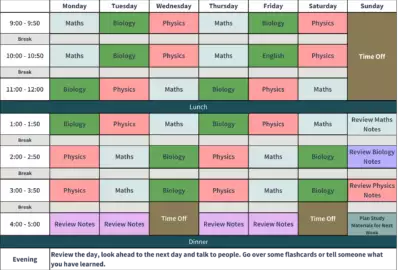
Free A Level Revision Timetable Template
A good revision timetable will ensure you have a plan to cover all the topics you need to cover. You will have been stud...
A Complete Guide to Every A Level Exam Board
Choosing the right A-Level exam board can significantly influence a student’s academic journey. While all boards adhere ...

A Level Maths Revision: The Ultimate Guide
This guide is designed to streamline your A Level Maths revision, breaking down complex topics and offering targeted str...

How to Prepare for A Levels: A Back-to-School Guide
Starting Year 12 is a step change. You will take fewer subjects, go deeper, and your independent study will matter as mu...