Expert Insights
Best Engineering Universities in the UK for 2026
Published 19th June 2026 by Alastair
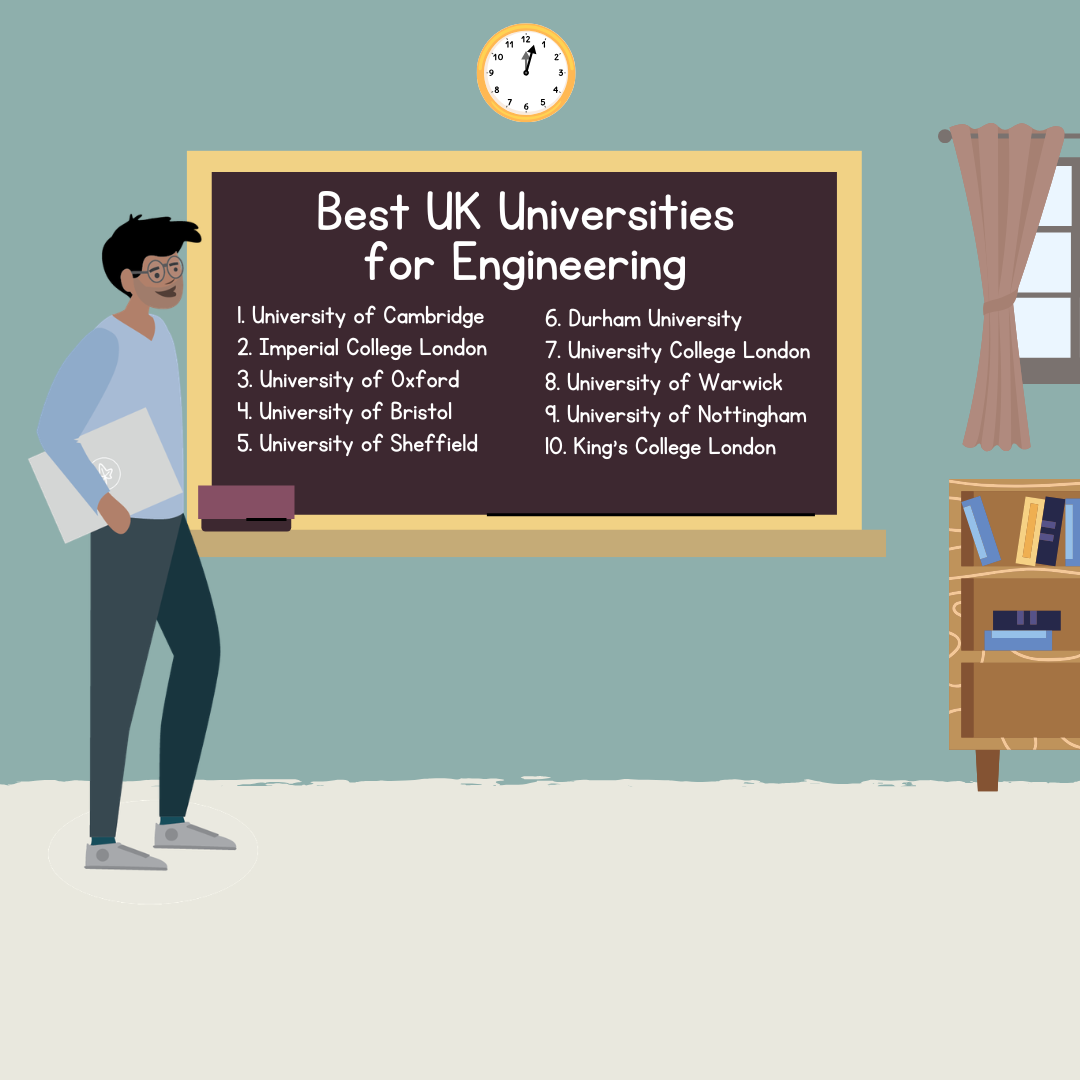
The best engineering universities in the UK rank among the strongest in the world, and the competition for places at the top of them is fierce.
Imperial College London sits 2nd in the QS World University Rankings 2026, the highest-placed UK institution on the planet, while Cambridge, Oxford and UCL all hold positions in the global top ten. For a prospective engineer, that concentration of talent is rare: few countries can offer this many world-class departments within a few hours of one another.
Choosing between them, though, is rarely about the league tables alone. Course structure, professional accreditation, the strength of a department's industry links, the availability of a year in industry and the specialism you want to pursue all shape the engineer you will become, and none of them is captured by a single ranking number. In this guide, Ivy Education ranks the leading UK engineering universities for 2026, blending the Complete University Guide 2027, the Guardian University Guide 2026 and the QS World University Rankings by Subject 2026 with our own justifications for rankings based on experience from our expert university admissions consultants. We explain how the data works, what it means for you as an applicant, and how to choose the course that fits.
It combines deep analytical training with the satisfaction of building things that work in the real world, from medical devices and renewable energy systems to bridges, aircraft and the software that runs them. Few subjects move so directly from theory to tangible impact.
Engineering graduates are among the most employable in the country, and starting salaries in disciplines such as electronics, chemical, and software-adjacent engineering consistently sit above the graduate average. A degree from an accredited course also puts you on the path to Chartered Engineer (CEng) status, a professional benchmark recognised internationally and one that materially affects earning potential over the course of a career.
It is also a broad enough subject to suit a wide range of students. Some are drawn to the pure problem-solving of mechanical or aerospace work, others to the systems thinking of civil and structural engineering, others again to the fast-moving worlds of electronic, electrical and software engineering. Most UK courses allow you to start general and specialise as you progress, so an early uncertainty about which branch suits you best is rarely a barrier to applying.
At Ivy Education, we work with aspiring engineers every year, and we know that choosing the right course is about far more than a ranking. It is about finding the department, teaching style, and specialism where you will do your best work. This guide is designed to help you do exactly that.
Course type: general versus specialised. UK engineering degrees are broadly split into two routes. General engineering courses, such as those at Cambridge and Oxford, keep you across multiple disciplines for the first year or two before you specialise, which suits students who are not yet certain of their branch. Specialised courses in mechanical, civil, electrical, aerospace, or chemical engineering let you commit from day one and go deeper, sooner. Neither route is better in the abstract; it depends entirely on how settled you are in your direction.
Accreditation and Chartered status. This matters more in engineering than in almost any other subject. Look for courses accredited by the relevant professional bodies, including the Institution of Mechanical Engineers (IMechE), the Institution of Civil Engineers (ICE), the Institution of Engineering and Technology (IET), and the Royal Aeronautical Society (RAeS), among others. Accreditation is what allows a degree to count towards Chartered Engineer (CEng) status, and an integrated four-year MEng is usually the cleanest route to meeting the full academic requirement. An unaccredited course can leave you doing extra work later to charter, so this is worth checking on every shortlist.
Specialism and departmental strength. A university's overall ranking can hide real variation between branches. A department that is mid-table for general engineering may be one of the best in the country for, say, civil or electronic engineering. If you already know your specialism, the subject-specific tables matter far more than the headline figure, and it is worth looking at which research and facilities a department is known for.
Placements and a year in industry. Many of the strongest engineering courses offer an integrated year in industry, and the experience is often decisive in the graduate job market. A paid placement builds the practical competencies that accreditation bodies value, gives you a network before you graduate, and often leads to a job offer. Universities such as Loughborough, Bath and Surrey have built particularly strong reputations here.
Location and environment. Engineering is a three or four-year commitment, and where you spend it matters. Proximity to industry clusters can shape placement and graduate opportunities, an aerospace hub, an automotive corridor or a city with a dense engineering employer base all open doors, but the day-to-day experience of the city you live in counts for just as much.
If you would like personalised guidance on which engineering courses are the right fit for your profile, our Engineering Admissions team at Ivy Education is here to help.
The Complete University Guide 2027 is the UK's most research-focused domestic table. It scores universities on entry standards, student satisfaction, research quality and intensity, graduate prospects and spending on academic services. It also publishes a clean General Engineering table, which makes it the most reliable domestic backbone for a guide like this one. Bristol leads its General Engineering table for the current cycle, followed by Cambridge, Sheffield and Oxford.
The Guardian University Guide 2026 weighs the student experience more heavily: satisfaction with the course, teaching, and feedback; student-to-staff ratio; spending per student; value added; and graduate prospects after 15 months. Its General Engineering table places Cambridge first, then Oxford, Bristol and Sheffield. Because it leans on satisfaction rather than research power, some departments rank noticeably differently here than in the Complete University Guide, which is exactly why consulting both gives a fuller picture than either alone.
The QS World University Rankings by Subject 2026: Engineering & Technology provides a global context by assessing universities on academic reputation, employer reputation, research citations, and international research networks. QS publishes individual positions only for the world's leading institutions and bands the rest.
Ivy Education's ranking: Our ranking does not just 'average out' the three chosen rankings. For each university, we take its positions across the General Engineering tables in which it appears, then apply a documented editorial adjustment of no more than three places where the raw average clearly misrepresents a department's real strength. These adjustments draw on global reputation, the strength of a university's specialist engineering tables, professional accreditation, industry links and our own experience placing students. Every adjustment is deliberate and disclosed in the notes beneath the table.
One thing to note on our methodology: Unlike most subjects, engineering is split across many league tables: alongside General Engineering, the Complete University Guide and the Guardian both publish separate tables for mechanical, civil, electrical and electronic, aeronautical and chemical engineering. A university can be modest in the General Engineering table yet dominant in a specialism. Imperial College London is the clearest case: it does not appear in the Complete University Guide's General Engineering table at all, yet it ranks first in the same guide's Mechanical, Civil and Aerospace tables and sits 2nd in the world overall in QS 2026. Ranking it on General Engineering alone would badly understate it. Our ranking exists to catch cases like this, so that the final table reflects what we believe is a truer representation of a university's subject offering.
How to read this table: Ivy Rank is our combined editorial ranking. Guardian 2026 and CUG 2027 are domestic General Engineering league table positions. QS 2026 reflects each university's standing in the QS World University Rankings by Subject 2026: Engineering & Technology, a global faculty area. QS publishes individual positions only for the world's leading institutions and bands the rest, so universities outside the global top tier are marked "outside top 20" rather than given an invented position. A dash means the university is not ranked in that particular table.
| Ivy Rank | University | Typical Offer (A-level / IB) | Maths Required? | Further Maths / Physics? | Admissions Test | Guardian 2026 | CUG 2027 | QS 2026 |
|---|---|---|---|---|---|---|---|---|
| 1 | University of Cambridge | A*A*A / IB 40–42 | Yes (A*) | Both required | ESAT | 1 | 2 | Top tier |
| 2 | Imperial College London | A*A*A / IB 40–42 | Yes (A*) | Physics req; Further Maths preferred | ESAT | 5 | – | Top tier |
| 3 | University of Oxford | A*AA / IB 40 | Yes | Physics or Further Maths | ESAT | 2 | 4 | Top tier |
| 4 | University of Bristol | A*AA / IB 38–40 | Yes | Physics typically required | None | 3 | 1 | Outside top 20 |
| 5 | University of Sheffield | AAA / IB 36 | Yes | Physics preferred | None | 4 | 3 | Outside top 20 |
| 6 | Durham University | A*A*A / IB 38 | Yes | Further Maths or Physics preferred | None | 6 | 5 | Outside top 20 |
| 7 | University College London (UCL) | A*AA / IB 39 | Yes | Further Maths or Physics | None | 7 | – | Top tier |
| 8 | University of Warwick | A*AA / IB 38 | Yes | Physics or Further Maths | None | 10 | 6 | Outside top 20 |
| 9 | University of Nottingham | AAA / IB 36 | Yes | Physics preferred | None | – | 7 | Outside top 20 |
| 10 | King's College London | AAA / IB 35 | Yes | Physics or Further Maths preferred | None | 13 | 8 | Outside top 20 |
| 11 | Loughborough University | AAB–AAA / IB 35 | Yes | Physics preferred | None | 15 | 9 | Outside top 20 |
| 12 | University of Leeds | AAA / IB 35 | Yes | Physics preferred | None | 9 | – | Outside top 20 |
| 13 | University of Birmingham | AAA / IB 32 | Yes | Physics preferred | None | 8 | – | Outside top 20 |
| 14 | University of Manchester | AAA / IB 37 | Yes | Physics or Further Maths | None | 12 | – | Outside top 20 |
| 15 | Cardiff University | AAA / IB 36 | Yes | Physics preferred | None | 24 | 10 | Outside top 20 |
| 16 | University of Exeter | AAA / IB 36 | Yes | Physics preferred | None | 17 | 13 | Outside top 20 |
| 17 | Queen Mary University of London | AAA / IB 34 | Yes | Physics preferred | None | 16 | 11 | Outside top 20 |
| 18 | University of Strathclyde | AAB / IB 36 | Yes | Preferred | None | 20 | 16 | Outside top 20 |
| 19 | Swansea University | AAB / IB 33 | Yes | Physics preferred | None | 11 | 20 | Outside top 20 |
| 20 | University of Aberdeen | AAB / IB 34 | Yes | Preferred | None | – | 14 | Outside top 20 |
| 21 | Aston University | AAB / IB 33 | Yes | Preferred | None | 19 | 12 | Outside top 20 |
| 22 | University of Leicester | AAB / IB 32 | Yes | Preferred | None | 23 | 17 | Outside top 20 |
| 23 | Ulster University | BBB / IB 27 | Yes | Preferred | None | 14 | 15 | Outside top 20 |
| 24 | University of Glasgow | AAB / IB 36 | Yes | Preferred | None | 26 | – | Outside top 20 |
| 25 | University of East Anglia | ABB / IB 32 | Yes | Preferred | None | 25 | 27 | Outside top 20 |
| 26 | Brunel University of London | BBB / IB 30 | Yes | Preferred | None | – | 19 | Outside top 20 |
| 27 | Liverpool John Moores University | BBC / IB 26 | Yes | Preferred | None | – | 18 | Outside top 20 |
| 28 | University of York | AAA / IB 35 | Yes | Physics preferred | None | – | 25 | Outside top 20 |
| 29 | Lancaster University | AAB / IB 32 | Yes | Preferred | None | – | 21 | Outside top 20 |
| 30 | Nottingham Trent University | BBC / IB 28 | Yes | Preferred | None | 18 | 22 | Outside top 20 |
| 31 | Glasgow Caledonian University | BBB / IB 28 | Yes | Preferred | None | 21 | 24 | Outside top 20 |
| 32 | Coventry University | BBC / IB 27 | Yes | Preferred | None | – | 26 | Outside top 20 |
| 33 | University of Central Lancashire | BCC / IB 26 | Yes | Preferred | None | 22 | – | Outside top 20 |
| 34 | University of Essex | BBC / IB 28 | Yes | Preferred | None | – | 29 | Outside top 20 |
| 35 | Bournemouth University | BCC / IB 28 | Yes | Preferred | None | – | 28 | Outside top 20 |
| 36 | University of the West of Scotland | CCC / IB 24 | Yes | Preferred | None | – | 32 | Outside top 20 |
| 37 | London South Bank University | BBC / IB 26 | Yes | Preferred | None | – | 23 | Outside top 20 |
| 38 | University of Portsmouth | BCC / IB 26 | Yes | Preferred | None | – | 33 | Outside top 20 |
| 39 | Canterbury Christ Church University | CCC / IB 24 | Yes | Preferred | None | – | 30 | Outside top 20 |
| 40 | NMITE (Hereford) | Contextual offers | Yes | Preferred | None | – | 31 | Outside top 20 |
| 41 | University of Northampton | CCC / IB 24 | Yes | Preferred | None | 27 | 34 | Outside top 20 |
Sources: Complete University Guide General Engineering 2027, Guardian University Guide General Engineering 2026, and QS World University Rankings by Subject 2026: Engineering & Technology (published 25 March 2026). Domestic positions are General Engineering table positions. QS gives individual global positions only to leading institutions and bands the rest, so universities outside the global top tier are marked "outside top 20". Typical offers and subject requirements are indicative for 2026 entry and vary by specific engineering discipline; always verify against each university's live admissions page before applying.
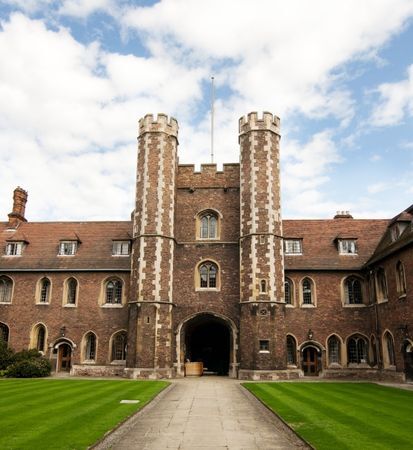
Rather than choosing a branch on application, students read for a single Engineering degree and study across the disciplines for the first two years, specialising only from the third. For an applicant who is excited by engineering but not yet wedded to a specialism, this is close to ideal, and it produces graduates with unusually broad foundations.
The degree is a four-year MEng leading to eligibility for Chartered Engineer status, taught through the university's renowned supervision system, in which students work in pairs or small groups with an expert. Cambridge sits 2nd in the Complete University Guide 2027 General Engineering table and tops the Guardian 2026, and its global standing in engineering is among the very highest anywhere.
Typical offer: A*A*A including Maths and Physics, with Further Maths strongly encouraged (IB 41 to 42 with 776 at Higher Level). All applicants must sit the ESAT (Mathematics 1, Mathematics 2 and Physics).
Ivy Education says: Cambridge is the right choice for the academically outstanding student who wants the broadest possible engineering foundation and thrives under intense, personal teaching. It is less suited to an applicant who already knows their specialism and wants to commit to it from day one.

Unlike Oxbridge, Imperial admits directly into named disciplines, so students commit to Mechanical, Civil, Aeronautical, Electrical and Electronic, Chemical or Design Engineering from the outset and specialise deeply.
Its London location is certainly an advantage. The proximity to industry, research partners and employers feeds directly into placements and graduate outcomes, and Imperial degrees carry the Associateship of the City and Guilds of London Institute (ACGI) alongside the MEng. Every engineering course is professionally accredited and built around the route to Chartered Engineer status.
Typical offer: A*A*A, with A* in Maths (or A in Physics) typically required and Further Maths welcomed (IB around 40 to 42). All engineering applicants must sit the ESAT.
Ivy Education says: Imperial College London suits a student who already knows they want to be an engineer in a specific discipline and wants the most intense, specialised and industry-connected education available. It is a demanding day-to-day job, and it rewards applicants who relish it.
Image: Main Entrance, Imperial College London by Shadowssettle, CC BY-SA 4.0, via Wikimedia Commons
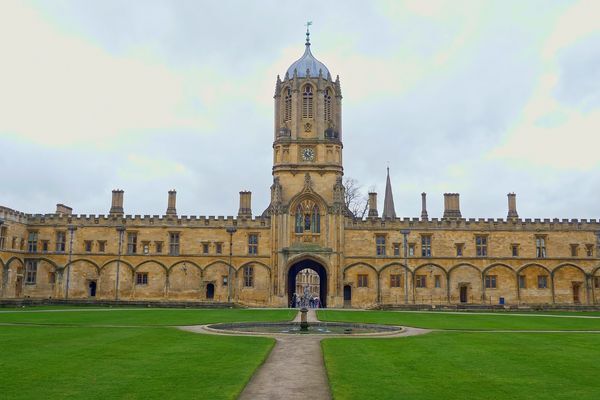
The course is unified rather than split by department on entry, reflecting Oxford's belief that the best engineers understand the connections between disciplines rather than working in a single silo.
Teaching runs through the tutorial system, with small-group sessions that demand students think aloud and defend their reasoning. Oxford places 2nd in the Guardian 2026 General Engineering table and 4th in the Complete University Guide 2027, and its global reputation places it firmly in the top tier. A notable change for current applicants: Oxford Engineering Science has moved to the ESAT, which now replaces the former Physics Aptitude Test (PAT) for this course.
Typical offer: A*A*A with the A*s in Maths, Further Maths or Physics, and both Maths and Physics required (IB 40 with 776 at Higher Level). All applicants must sit the ESAT.
Ivy Education says: Oxford is the right choice for the exceptional all-rounder who wants a broad, intellectually rigorous engineering education delivered through intensive tutorials. As with Cambridge, it suits the undecided specialist more than the student set on a single branch. With the top three: Cambridge, Imperial, and Oxford, it's really more a matter of preference and fit.

It offers the full range of engineering disciplines, mechanical, civil, electrical and electronic, aerospace and design, among them, with both BEng and MEng routes and strong provision for a year in industry. The faculty has a long-standing reputation for research strength and close ties to aerospace and advanced engineering employers in the South West.
Bristol's courses are professionally accredited and built around the path to Chartered Engineer status, and the city itself is regularly rated one of the best places in the UK for students. The combination of top domestic rankings, research depth and quality of life makes it a perennial favourite among strong applicants.
Typical offer: A*AA including A* and A in Maths and one of Physics, Chemistry, Further Maths, Computer Science or Electronics (IB 38 with 7,6 at Higher Level). No admissions test for A-level applicants.
Ivy Education says: Bristol is one of the most reliable choices in the country: excellent rankings, impressive research strength, broad disciplinary coverage and a superb student city. It suits students who want a top-tier engineering education without the all-or-nothing intensity of an admissions test.

Its Faculty of Engineering is among the largest and most highly regarded in the country, with particular strength in aerospace, mechanical and materials engineering, and it is closely tied to the Advanced Manufacturing Research Centre (AMRC), a world-leading collaboration with employers including Boeing and Rolls-Royce that gives students rare exposure to industrial-scale engineering.
Courses span the full range of disciplines with BEng and MEng routes, year-in-industry options and professional accreditation throughout. Sheffield also consistently scores well on student experience, and the city offers a low cost of living relative to the south.
Typical offer: A*AA including Maths and at least one of Physics, Chemistry or Biology (IB 38 with 6 in Higher Level Maths and a science). No admissions test.
Ivy Education says: Sheffield is an outstanding choice for students drawn to hands-on, industry-connected engineering, especially in aerospace and manufacturing. Its AMRC links offer something most universities simply cannot match.
Image: University of Sheffield Students' Union by Brit in Seoul, CC BY-SA 4.0, via Wikimedia Commons

Students join a single General Engineering programme, study a broad common core across civil, electrical, electronic and mechanical engineering for the first two years, then specialise from the third, with the option to add aeronautical, renewable energy or bioengineering topics in the final year. It places 5th in both the Complete University Guide 2027 and the Guardian 2026 General Engineering tables, a consistency that reflects its all-round quality.
The department is among the most comprehensively equipped in the UK, with wind tunnels, a geotechnical laboratory, and microelectronics cleanrooms, and all its MEng programmes are accredited for Chartered Engineer status. Durham's collegiate system and strong student experience enhance the appeal to applicants seeking academic rigour in a close-knit setting.
Typical offer: A*AA including Maths and one practical endorsement science (Biology, Chemistry, Geology or Physics), IB 38 with 666 at Higher Level. No admissions test.
Ivy Education says: Durham suits the student who wants a broad, flexible engineering foundation before committing to a specialism, delivered in a traditional collegiate environment. The late specialisation is a real strength for applicants who are not yet certain of their branch.
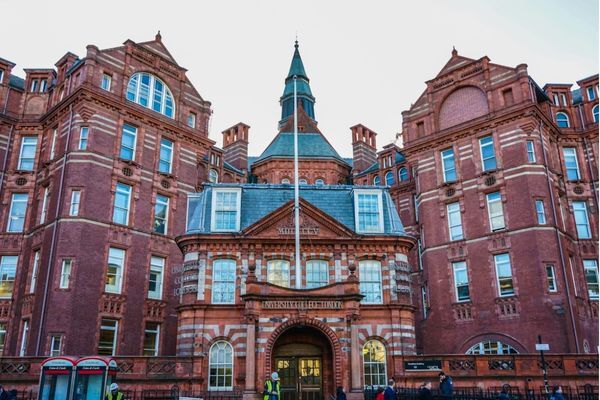
It ranks 7th in the Guardian 2026 General Engineering table, and its breadth is considerable, spanning mechanical, civil, electronic and electrical, biochemical and chemical engineering, all delivered in central London with direct access to industry, research partners and employers.
UCL admits into named disciplines, and its integrated MEng degrees are professionally accredited and fully meet the academic requirements for Chartered Engineer status. The university has a long tradition of applied, problem-led engineering education, and its London location feeds directly into placement and graduate opportunities.
Typical offer: A*AA with Maths and Physics required and the A* in one of them, IB 39 with 19 points at Higher Level (7,6 in Maths and Physics). No admissions test.
Ivy Education says: UCL is the strongest all-round engineering option in central London, combining global standing with a broad, accredited and industry-connected education. It suits the student who already knows their discipline and wants to study it in the heart of the capital.
Warwick ranks 10th in the Guardian 2026 and 6th in the Complete University Guide 2027 General Engineering tables, and is known for unusually strong industry links and a strong emphasis on real-world design projects.
Courses are accredited by the IET and IMechE and built around the route to Chartered Engineer status, and Warwick's reputation with graduate employers is consistently excellent. The campus environment, with its strong cohort culture and well-resourced facilities, is a further draw.
Typical offer: A*AA to include Maths and Physics, IB 38 with 6,6,6 at Higher Level (Maths and Physics required, at least one at Higher Level). No admissions test.
Ivy Education says: Warwick is an excellent choice for the student drawn to a broad, design-led and industry-focused engineering education. Its multidisciplinary model is a strength for those who want to keep flexible and specialise later.
Image: University of Warwick by Ranadee29, CC BY-SA 4.0, via Wikimedia Commons
Its Faculty of Engineering is one of the largest in the UK, with particular strength in mechanical, aerospace and manufacturing engineering, and it has a strong record in research power and professional accreditation. The faculty was the first UK engineering department to achieve the Athena SWAN Gold Award for gender equality, reflecting a serious commitment to widening participation in the field.
Courses span the full range of disciplines with BEng and MEng routes, year-in-industry and study-abroad options, and accreditation by bodies including the IMechE. Nottingham's large, green campus and strong graduate employer links round out the offer.
Typical offer: A*AA with A in Maths and either Physics or Further Maths (or two of Chemistry, Biology, Design or Electronics), IB 36 with HL Maths and Physics. No admissions test.
Ivy Education says: Nottingham suits the student who wants a large, well-resourced engineering faculty with deep specialist strength, particularly in mechanical, aerospace and manufacturing engineering, and strong routes into industry.

KCL's engineering course is primarily project-led (as are many courses at KCL), with around a quarter of the degree devoted to design and project work, and a strong emphasis on producing well-rounded, adaptable graduates.
Based in central London, King's offers general, electronic and mechanical engineering routes with professional accreditation and the path to Chartered Engineer status. It is also one of the leading Russell Group universities for the proportion of female undergraduates on its engineering programmes, part of a deliberate effort to broaden who studies the subject.
Typical offer: A*AA / AAA depending on course, with grade A in Maths required, IB 36 with grade 6 in Higher Level Maths. No admissions test. Notably, King's requires Maths but not Physics, which can suit strong mathematicians who did not take A-level Physics.
Ivy says: KCL is a strong choice for the student who wants a modern, design-led and interdisciplinary engineering education in central London. Its Maths-but-not-Physics entry route also opens the door to capable applicants who other top departments would exclude.
A-levels. Mathematics is the one near-universal requirement. Almost every engineering course in the UK requires A-level Maths, and the most competitive ask for an A* in it: Cambridge, Imperial, Oxford and UCL all expect A*A*A or A*AA with the A* in a core subject. Physics is the usual second requirement, particularly for mechanical, civil, aerospace and electrical engineering, though some universities accept an alternative from Chemistry, Further Maths, Computer Science, Electronics or Design and Technology. The notable exceptions are worth knowing: King's College London, for example, requires Maths but not Physics, which can open the door for strong mathematicians who did not take A-level Physics. Typical offers across the sector range from roughly ABB at the more accessible end to A*A*A at the very top.
Further Mathematics. Further Maths is rarely a formal requirement, but at the most competitive universities it is strongly preferred, and for the most mathematical disciplines, such as electrical, electronic and aerospace engineering, it is a real advantage. The key principle is that universities will not penalise you for not taking Further Maths if your school does not offer it. If it is available to you and you are aiming for the top tier, taking it strengthens your application and prepares you for the mathematical demands of the degree.
Subject requirements by discipline. The second science you need depends on the branch. Mechanical, civil and aerospace engineering lean towards Physics. Chemical engineering usually prefers, and often requires, Chemistry. Electrical and electronic engineering value Physics and Further Maths most. If you already know your specialism, check the specific course page, because a subject that is merely preferred for general engineering may be required for a named discipline.
International Baccalaureate. IB offers typically range from around 36 to 42 points depending on the university, with Higher Level scores of 6 or 7 required in Maths and usually Physics. Oxford asks for 40 points with 776 at Higher Level; Cambridge requires 41 to 42; most other leading universities sit between 36 and 39. IB students should note that several universities specify Mathematics: Analysis and Approaches at Higher Level to meet the Maths requirement.
GCSEs. Most universities expect at least a grade 4 (or C) in GCSE English Language and Maths, and many competitive courses look for stronger GCSE profiles, with a high proportion of grades 7 to 9, as part of a holistic assessment. A weak GCSE record will not necessarily rule you out, but at the most selective universities it can count against an otherwise strong application.
Beyond the grades. Strong academics get you considered, but admissions tutors also look for evidence of a real interest in engineering: relevant reading, projects, work experience, or participation in engineering activities and competitions. For the universities that interview, and for the small number that require an admissions test (covered in the next section), this wider engagement is often what separates successful applicants from the rest. Your personal statement is the primary place to demonstrate it. Ivy Education's Engineering Personal Statement support helps applicants turn that interest into a statement that stands out to admissions tutors.
The exceptions are concentrated at the very top, and for the current cycle, they centre on one test: the ESAT. This is one of the biggest differences between engineering and subjects like Medicine or Law, where a test such as the UCAT or LNAT is effectively unavoidable. For the large majority of engineering applicants, the application rests on grades, predicted grades, the personal statement and, at some universities, an interview. Let's get into the tests that may be required below:
The ESAT (Engineering and Science Admissions Test). The ESAT is now the main admissions test for engineering at the most competitive universities. It is required by Cambridge, Imperial College London and Oxford for their engineering courses. It is a computer-based, multiple-choice test taken in October at a Pearson VUE centre, set by UAT-UK, the partnership between Cambridge and Imperial. Engineering applicants sit a compulsory Mathematics 1 module plus further modules, typically Mathematics 2 and Physics, depending on the course. There is no pass or fail; your score informs whether you are shortlisted for interview, and no marks are lost for wrong answers.
A point worth flagging for this cycle: Oxford has moved its Engineering Science admissions to the ESAT, which replaces the former Physics Aptitude Test (PAT) for that course. Applicants who relied on older guidance may still expect the PAT, so check the current requirement carefully before you prepare. If you are applying to more than one ESAT university, you only need to sit the test once, but Oxford and Cambridge applicants must take the October sitting.
The TMUA (Test of Mathematics for University Admission). The TMUA is a maths-reasoning test rather than an engineering test, but it appears at the edges of engineering admissions, mainly for mathematics-heavy or interdisciplinary courses such as those blending engineering with computing or economics at universities including Imperial. It is also set by UAT-UK and taken in October or January. Most mainstream engineering applicants will not need it, but if your chosen course sits close to maths or computing, check whether it applies.
Everywhere else: no test. Beyond Cambridge, Imperial and Oxford, the overwhelming majority of UK engineering courses, including those at strong universities such as Bristol, Sheffield, Durham, UCL, Warwick, Nottingham and King's, require no admissions test for A-level applicants. Some use their own maths test only in specific circumstances, for example for applicants offering certain BTEC qualifications in place of A-level Maths.
The practical takeaway is simple. If you are aiming at Cambridge, Imperial or Oxford, the ESAT is a serious part of your application and rewards dedicated preparation. If you are applying elsewhere, your energy is better spent on your grades and personal statement. Ivy Education's ESAT tuition provides targeted, expert preparation for applicants to the universities that require it.
Home (UK) students: For students starting in 2026, the tuition fee for a standard full-time undergraduate course is capped at £9,790 per year, the rate set by the UK government and charged by virtually every university. The government has confirmed this cap will rise to £10,050 for 2027/28, and fees are expected to increase roughly in line with inflation in later years, so a four-year MEng starting in 2026 will cost slightly more in its final years than in its first. Home students can cover these fees with a tuition fee loan from the UK government, repayable only once you are earning above the relevant threshold. Many universities also offer bursaries: Imperial, for example, provides up to £5,000 a year to eligible home undergraduates.
MEng: Most engineering students study either a three-year BEng or a four-year integrated MEng, and the MEng is the standard route to Chartered Engineer status. The practical consequence is that an MEng carries a fourth year of tuition fees that a BEng does not. This is worth factoring into your planning, though for most students the additional year is a sound investment given that it satisfies the full academic requirement for chartership in a single qualification. Where a course includes a year in industry, universities typically charge a reduced fee for that year (often up to 20 per cent of the standard rate).
International students: Overseas fees are set by each university and are considerably higher, with engineering among the more expensive subjects because of its laboratory and equipment costs. For 2026 entry, international engineering fees at the leading universities typically range from around £30,000 to over £40,000 per year. Imperial, for instance, charges international engineering students roughly £40,000 a year, and Cambridge sits in a similar bracket. International students are not eligible for UK government tuition fee loans, though many universities offer scholarships, and it is worth researching these early.
Living costs: Beyond tuition, you should budget for accommodation, food, travel and course materials. Costs vary widely by location: London is the most expensive place to study, while cities in the North of England, Scotland, Wales and Northern Ireland generally offer better value. As a rough guide, students outside London should budget around £1,000 to £1,500 per month, and those in London £1,500 to £2,000 per month.
Scotland and SAAS: There is one significant exception to the fee picture. Scottish-domiciled students studying at a Scottish university pay no tuition fees for their first undergraduate degree, including engineering, because the Student Awards Agency Scotland (SAAS) covers them. This is a substantial financial advantage and a factor some applicants do not fully weigh when choosing between Scottish and other UK universities. Students from England, Wales and Northern Ireland studying in Scotland do pay fees, and Scottish students studying elsewhere in the UK pay the fees of the nation they study in.

Choosing the best engineering university for you is one of the most important decisions you will make as a prospective engineer, and it is rarely as simple as picking the name at the top of a league table. The ranking in this guide, combining the Complete University Guide 2027, the Guardian University Guide 2026 and QS 2026 with Ivy's editorial overlay, gives you a rigorous and honest foundation for that decision. But the data is a starting point, not the whole answer. Course structure, professional accreditation, the strength of a department in your chosen specialism, the availability of a year in industry and the character of the city you will live in all matter, often more than a single position on a table.
What the data does confirm is that the UK's engineering departments are among the strongest in the world. Imperial sits second globally, Cambridge, Oxford and UCL all rank in the worldwide top ten, and the depth of quality extends far beyond them, from Bristol and Sheffield's research and industry strength to the specialist excellence found across the Russell Group and beyond. Whether you are drawn to the broad, late-specialising models of Cambridge, Oxford and Durham, the discipline-focused intensity of Imperial, or the design-led and industry-connected courses at universities such as Warwick and King's, the standard on offer is remarkable.
At Ivy Education, our consultants work with aspiring engineers from the earliest stages of subject choice through to UCAS submission, ESAT preparation and interview coaching. We know these universities, their courses and their admissions processes in detail, and we use that knowledge to help our students secure their places. If you would like personalised guidance on building the strongest possible engineering application, our Engineering Admissions team is here to help.
Get in touch with our Engineering Admissions team today!
By our Ivy ranking for 2026, the University of Cambridge is the best university for engineering in the UK, followed by Imperial College London and the University of Oxford. Imperial ranks second in the world overall in the QS World University Rankings 2026, the highest-placed UK university. That said, "best" depends on what you want: applicants set on a single discipline may prefer Imperial's specialist depth, while those who want to keep their options open may favour the broad, late-specialising courses at Cambridge, Oxford or Durham.
Most UK engineering courses require A-level Maths as an absolute minimum, usually alongside Physics, with typical offers ranging from around ABB to A*A*A. The most competitive universities (Cambridge, Imperial, Oxford and UCL) ask for A*A*A or A*AA with an A* in a core subject. At IB level, offers range from roughly 36 to 42 points with Higher Level Maths and usually Physics. Strong GCSEs help at the most selective universities.
No, Further Maths is not normally a formal requirement to study engineering, but it is strongly preferred at the most competitive universities and is a real advantage for mathematical disciplines such as electrical, electronic and aerospace engineering. Universities will not penalise you for not taking it if your school does not offer it. If it is available and you are aiming for the top tier, taking it strengthens your application.
Most UK engineering courses require no admissions test at all. The main exception is the ESAT (Engineering and Science Admissions Test), which is required by Cambridge, Imperial College London and Oxford for their engineering courses. A small number of maths-heavy or interdisciplinary courses use the TMUA. Beyond these, the overwhelming majority of universities make offers on grades, the personal statement and, in some cases, an interview.
Physics is required or strongly preferred for most engineering courses, particularly mechanical, civil, aerospace and electrical engineering. However, it is not universal: King's College London, for example, requires Maths but not Physics for its engineering degrees, and some universities accept an alternative such as Chemistry, Further Maths or Computer Science as the second subject. Chemical engineering courses often prefer Chemistry over Physics.
Engineering degrees in the UK are typically three years for a BEng or four years for an integrated MEng. The four-year MEng is the standard route to Chartered Engineer (CEng) status, as it satisfies the full academic requirement in a single qualification. Many courses also offer an additional year in industry, which extends the degree by a year but significantly strengthens graduate employment prospects.
Both are extremely competitive, with acceptance rates of around 13 to 16 per cent for engineering. Cambridge typically asks for A*A*A with the A*s in Maths and Physics, while Oxford requires A*A*A with the A*s in Maths, Further Maths or Physics. Both now require the ESAT and rigorous interviews. The two courses are similar in structure, so the choice often comes down to college system, course detail and personal fit rather than difficulty.
A BEng is a three-year undergraduate engineering degree, while an MEng is a four-year integrated master's. The key practical difference is that the MEng fully meets the academic requirement for Chartered Engineer (CEng) status in one qualification, whereas a BEng graduate usually needs further study to charter. Most universities allow strong BEng students to transfer to the MEng, often at the end of the second year.

Alastair Delafield is the Managing Director and founder of Ivy Education.
All Author Posts