Expert Insights
Supercurriculars Guide: How They Strengthen a Personal Statement
Published 27th November 2026 by Ciaran Chillingworth

Supercurricular activities are things you do to explore your subject beyond what you're taught at school. They might include reading, attending lectures, listening to podcasts, entering competitions, working on projects or gaining relevant work experience.
For students applying to selective UK universities, these activities can form an important part of a personal statement. They give admissions tutors an insight into how you engage with your subject outside the classroom.
The UCAS personal statement now asks three separate questions, and supercurriculars can help you answer all three. This guide explains what counts, why universities value these activities, where they fit in each question and how to write about them effectively. It's written for students, as well as parents who want to understand what admissions tutors are looking for.
Before we begin...
Supercurricular activities are academic activities linked to the course you want to study that take you beyond your A Level, IB or Highers syllabus. Christ's College, Cambridge says they can take many forms, provided they are academic in nature and relevant to your course. Some Cambridge colleges use the term "supra-curricular" to describe the same activities.
It can help to compare supercurricular activities with extracurricular ones.
| Supercurricular | Extracurricular | |
|---|---|---|
| Link to your course | Directly relevant to your chosen subject | Usually unrelated to your chosen subject |
| Examples | Wider reading, lectures, podcasts, olympiads, essay competitions, an EPQ, relevant work experience | Sport, music, Duke of Edinburgh, being a prefect |
| What it shows a university | Interest in the subject and readiness for university-level study | Personal qualities, commitment and time management |
| Space in a selective personal statement | Usually a substantial part, alongside your school studies | Often a sentence or two, if included |
The same activity can fall into either category depending on the course. Christ's College gives the example of music: it counts as supercurricular for a music applicant because it is directly relevant to their subject. Drama club could serve a similar purpose for an English Literature applicant, while it would usually be considered extracurricular for someone applying to study chemistry.

Selective universities place considerable emphasis on academic ability and potential. Oxford explains that its tutors are interested in these qualities, and that simply saying you have a passion for a subject isn't enough on its own. Supercurricular activities give you an opportunity to demonstrate that interest through what you have explored and learnt independently.
Girton College, Cambridge says admissions tutors are particularly interested in applicants' academic exploration beyond the school curriculum, including what they think about what they have read or heard and what they have learnt from it. Reflection is an important part of this. Tutors want to understand how you respond to an idea, follow up a question or develop your understanding.
Oxford suggests that around 80% of a personal statement should focus on academic interests, abilities and achievements. Several Oxford colleges, including Magdalen and Worcester, give similar guidance and include supercurricular activities within that academic focus.
Supercurricular activities can also help you decide whether a subject is right for you. Wider reading before you apply gives you a better idea of the topics and questions you might encounter during three or four years of study.
They don't need to cost money either. Christ's College is clear that supercurricular activities should not depend on who has connections or can pay for particular experiences. Many useful resources are free, and universities read applications in context, considering what students have done in relation to the opportunities available to them.
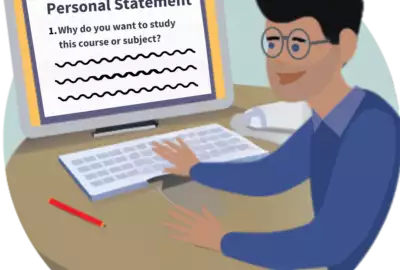
The UCAS personal statement is now divided into three questions. The total limit remains 4,000 characters, and each answer needs at least 350 characters, so you can decide how to divide the remaining space.
It may seem easiest to save most of your supercurricular activities for the third question, which asks about preparation outside education. However, Corpus Christi College, Cambridge advises applicants to include evidence of supercurricular engagement throughout all three sections!
| UCAS question | What it asks | How supercurriculars help |
|---|---|---|
| 1. Why do you want to study this course or subject? | Your motivation and the parts of the subject that interest you most | A book, lecture or problem that sparked a particular interest gives you a concrete reason for wanting to study the subject. |
| 2. How have your qualifications and studies helped you to prepare for this course or subject? | What you've learnt at school and how it links to the course | Explain how you followed up a topic from class independently, perhaps through further reading, entering an olympiad or exploring a subject in greater depth through an EPQ. |
| 3. What else have you done to prepare outside of education, and why are these experiences useful? | Experiences beyond formal study and what they taught you | Discuss lectures, competitions, summer schools, research or relevant work experience, explaining what you gained from each. |
Each answer has a relatively small amount of space, so there is little room to describe several activities in depth. Choose a few examples that best demonstrate your interest and give yourself enough space to explain what you took from them.

Cambridge lists several ways to explore a subject: reading books, magazines and journals, browsing relevant websites, visiting museums and exhibitions, watching documentaries, listening to podcasts, attending lectures, taking part in relevant volunteering or work experience, and entering academic competitions or projects. Christ's College also recommends free online courses and trying past competition papers, even if you don't enter.
Some particularly useful resources are run by universities themselves and are free:
The most relevant activities will depend on the subject you intend to study.
| Subject area | Examples of supercurricular activity |
|---|---|
| Maths and physics | Isaac Physics problems, UKMT and British Physics Olympiad papers, books exploring topics beyond the syllabus |
| Computer science | A personal programming or hardware project, such as developing an app or building with a Raspberry Pi, or completing a research project |
| Sciences and medicine | Popular science books, journal articles, olympiads, an EPQ or research placement, relevant volunteering |
| English and humanities | Reading beyond set texts, including older works, essay competitions, museum and gallery visits, lectures and podcasts |
| Modern languages | Reading, films and news in the target language, exploring culture and literature as well as the language itself |
| Economics, law and social sciences | Following current issues in the news, reading books and attending lectures on the subject, essay competitions, relevant work experience |
The Cambridge Department of Computer Science and Technology says a personal project doesn't have to be complicated or polished, and gives a simple programme run from the command line as an example. The same principle applies across subjects: a small piece of work you've thought carefully about can give you plenty to discuss, provided you understand it and can explain what you learnt.
Worcester College, Oxford suggests keeping a log of everything you explore, then choosing the five or six resources that have had the greatest effect on your understanding or enthusiasm for the subject. With three questions sharing 4,000 characters, two or three well-developed examples may be enough.
A simple way to structure each example is in three steps:
Here is the difference in practice:
| Listing | Reflecting |
|---|---|
| "I have read widely around economics, including several books on behavioural economics, and I attended a lecture on inflation." | "A lecture on inflation made me question why central banks target 2%. Reading further, I found the figure is a convention more than a law, which made me curious about how much of macroeconomic policy rests on agreed assumptions." |
The second version is about the same length, but it gives an admissions tutor a better idea of how the student thinks. It also introduces a specific topic that an interviewer could ask them to explore further.
Lucy Cavendish College, Cambridge advises that reflecting on what you've learnt allows you to demonstrate qualities universities value without having to state them directly. "I am curious and resilient" tells a tutor relatively little. Describing a problem you kept returning to, and how you approached it, gives them a much clearer picture. If you'd like one-to-one help developing your ideas and writing your personal statement, our personal statement consultants work with students at every stage of the UCAS process. The final statement always remains the student's own work.

For courses and universities that interview, the personal statement can help shape the conversation. Cambridge's Psychological and Behavioural Sciences department says it may use statements as a starting point for interview questions, and advises applicants to mention only books they would be happy to discuss. The History of Art department also reads statements closely and uses them to develop questions.
That doesn't mean every supercurricular activity you mention will come up. Cambridge's Veterinary Medicine department notes that these activities may or may not be discussed, although tutors will have read what you wrote.
In practice, this means:
Supercurriculars can also help with admissions tests. Lucy Cavendish College points out that becoming comfortable applying what you know to unfamiliar problems is a skill that helps in both tests and interviews. Problem sets such as Isaac Physics and past olympiad papers are useful ways to practise.
| Mistake | Why it weakens the statement | What to do instead |
|---|---|---|
| Listing books, lectures or activities | It tells tutors what you did, but gives them little insight into your thinking. Corpus Christi College, Cambridge advises applicants to avoid lists. | Choose fewer examples and explain what you thought about each one. |
| Mentioning things you haven't read or done properly | Tutors may ask you about anything you include. Worcester College, Oxford warns applicants to be prepared to discuss what they write about. | Only include work you know well enough to discuss. |
| Spending too much space on extracurriculars | Selective universities place particular emphasis on academic criteria. Christ's College, Cambridge says a sentence or two on non-academic interests is usually enough. | Keep most of the statement focused on your subject. |
| Assuming paid experiences count for more | Universities consider applications in context and value engagement with a subject, regardless of how much an experience cost. | Use free resources and explain what you learnt from them. |
| Naming a particular university | The same personal statement is sent to every university you apply to. | Focus on your interest in the subject rather than a specific course or institution. |
| Copying ideas or wording from online examples | UCAS checks personal statements for similarities with other statements and online sources. | Write from your own notes, reading and experiences. |

Supercurricular activities can provide some of the clearest evidence in a personal statement that a student is ready for university-level study. Selective universities, particularly Oxford and Cambridge, want applicants to demonstrate their academic interests, and exploring a subject beyond the school curriculum gives students useful material to discuss.
The important part is what you take from these experiences. A few well-chosen examples, explained in terms of what you did, what you thought and where it led, will tell admissions tutors more than a long list of activities. Include relevant examples across all three UCAS questions, make use of free resources from universities and other trusted organisations, and be prepared to discuss anything you mention at interview. Starting in Year 12 and keeping a record of what you read, watch and explore can make the personal statement much easier to write when the time comes.
Supercurricular activities are academic and linked to the course you're applying for, such as wider reading, lectures or subject competitions. Extracurricular activities are generally unrelated to your course, such as sport or Duke of Edinburgh. The same activity can fall into either category depending on the subject.
Oxford suggests that around 80% of a personal statement should focus on academic interests, abilities and achievements, and several Oxford and Cambridge colleges include supercurricular activities within this guidance. Other universities may place more emphasis on wider skills and experiences, so check the guidance for your chosen courses.
All three. Question 3 is the most obvious place to discuss activities outside formal education, but supercurriculars can also explain why you want to study the subject in Question 1 and show how you've built on your school studies in Question 2.
There's no set number. Worcester College, Oxford suggests choosing the five or six resources that have had the greatest effect on you. With 4,000 characters across three answers, two or three well-developed examples may be enough.
No. Many useful resources, including university reading lists, HE+, Oxplore, Isaac Physics and public lectures, are free. Christ's College, Cambridge also makes clear that supercurricular activities should not depend on how much a student can spend.
Yes, provided you're honest about how much you've read and can discuss the ideas you've explored. Anything in your statement could come up at interview, so only include material you're comfortable talking about.
It can be, provided it's relevant to your chosen course and you explain what you learnt from it. Work experience is particularly important for vocational subjects such as medicine, where universities often expect applicants to have gained relevant experience.
The earlier the better, but Year 12 is when many students begin building up the experiences they will write about in their personal statement. Keeping a short record of what you read and what you thought about it can make writing the statement much easier.
Yes. Many UK universities want to see evidence of interest in a subject beyond the school syllabus, although the balance between academic and wider activities varies by university and course.