Expert Insights
How to Revise for English Literature GCSE: A Complete Guide
Published 10th July 2026 by Alastair

There’s no sugar-coating that the English literature GCSE is going to require a lot of revision. You’re going to need to know these texts inside out and back-to-front.
The most effective way to revise for English Literature GCSE is to know your set texts in depth, build a bank of short and flexible quotations, and practise analytical essays against the official mark scheme. Both major exam boards run closed book exams, which means no copies of the texts are allowed in the hall and every quotation must come from memory. That one fact should shape everything about how you revise.
English Literature remains one of the largest GCSE subjects, with 649,481 entries in summer 2025, of which 74% achieved grade 4 or above and 20.2% achieved grade 7 or above (JCQ, 2025). The students at the top of that range are rarely the ones who re-read their novels the most. They are the ones who revised actively and practised writing under exam conditions.
This guide covers the exam structure for AQA and Edexcel, the set texts for each board, the four assessment objectives, quotation technique, poetry strategy, and how to build a revision plan across multiple texts.
GCSE English Literature is assessed through two closed-book written papers covering four set texts: a Shakespeare play, a 19th-century novel, a modern prose or drama text, and a cluster of poems from an anthology. Students also analyse unseen poetry. There is no coursework, and both papers are sat at the end of Year 11.
The structure depends on your exam board, so the first step in any revision plan is confirming which board you sit. Your English teacher can tell you, or it will be listed on your school's exams page. AQA is the most widely sat specification, with Edexcel the main alternative, so this guide focuses on those two. Here is how the AQA exam (specification 8702) is structured:
| Paper | Section | Text type | What students must do |
|---|---|---|---|
| Paper 1: Shakespeare and the 19th-century novel 1 hr 45 min, 64 marks, 40% of GCSE |
Section A | Shakespeare | One question on the play studied in class, analysing a printed extract and relating it to the play as a whole. |
| Paper 1: Shakespeare and the 19th-century novel 1 hr 45 min, 64 marks, 40% of GCSE |
Section B | 19th-century novel | One question on the novel studied in class, analysing a printed extract and relating it to the novel as a whole. |
| Paper 2: Modern texts and poetry 2 hr 15 min, 96 marks, 60% of GCSE |
Section A | Modern texts | One essay question from a choice of two on the studied modern prose or drama text. No extract is provided. |
| Paper 2: Modern texts and poetry 2 hr 15 min, 96 marks, 60% of GCSE |
Section B | Poetry anthology | One comparative question on a named poem printed in the paper and a second poem of the student's choice from their studied cluster. |
| Paper 2: Modern texts and poetry 2 hr 15 min, 96 marks, 60% of GCSE |
Section C | Unseen poetry | Two questions: an analysis of one unseen poem (24 marks), then a shorter comparison with a second unseen poem (8 marks). |
Both papers are closed book. Paper 2 carries more marks and more time, but neglecting Paper 1 is a common and costly mistake, since Shakespeare and the 19th-century novel together decide 40% of the grade.

AQA puts Shakespeare with the 19th-century novel on Paper 1 (40% of the grade) and the modern text, anthology poetry and unseen poetry on Paper 2 (60%). Edexcel pairs Shakespeare with post-1914 literature on Paper 1 and the 19th-century novel with poetry on Paper 2, with each paper worth 80 marks and 50% of the grade. Edexcel's Paper 1 lasts 1 hour 45 minutes and Paper 2 lasts 2 hours 15 minutes. This matters for revision planning: on Edexcel, your modern text sits alongside Shakespeare, so the balance of each revision week should reflect your own board's pairings.
Poetry is organised differently too. AQA students study one cluster of 15 poems from the Poems Past and Present anthology, choosing from Love and Relationships, Power and Conflict, or Worlds and Lives, a newer cluster examined for the first time in 2025. Edexcel students study one collection from its own anthology, with themes including Relationships, Conflict, Time and Place, and Belonging.
The table below shows the main set text options for each board. Your school chooses one text per category, so you only revise the texts you have been taught. Check the current specification on the AQA or Pearson Edexcel website to confirm your options, as boards add new texts from time to time.
| Category | AQA (8702) | Edexcel (1ET0) |
|---|---|---|
| Shakespeare | Macbeth, Romeo and Juliet, The Tempest, The Merchant of Venice, Much Ado About Nothing, Julius Caesar | Macbeth, Romeo and Juliet, The Tempest, The Merchant of Venice, Much Ado About Nothing, Twelfth Night |
| 19th-century novel | A Christmas Carol, Jane Eyre, Frankenstein, The Strange Case of Dr Jekyll and Mr Hyde, Great Expectations, Pride and Prejudice, The Sign of Four | Options include A Christmas Carol, Jane Eyre, Frankenstein, The Strange Case of Dr Jekyll and Mr Hyde, Great Expectations, Pride and Prejudice, Silas Marner |
| Modern prose or drama | Options include An Inspector Calls, Blood Brothers, Lord of the Flies, Animal Farm, plus newer additions; the full list is on the AQA specification | Options include An Inspector Calls, Hobson's Choice, Journey's End, Blood Brothers, Animal Farm, Lord of the Flies; the full list is on the Pearson specification |
| Poetry anthology | One cluster of 15 poems: Love and Relationships, Power and Conflict, or Worlds and Lives | One collection from the Edexcel anthology, including Relationships, Conflict, Time and Place, and Belonging |

AO1 rewards an informed personal response supported by evidence from the text. AO2 rewards analysis of how the writer uses language, form and structure to create effects, which is where subject terminology belongs. AO3 rewards understanding of the relationship between a text and its context, woven into the argument rather than bolted on as a separate paragraph. AO4 covers spelling, punctuation and grammar, and is assessed only on specific questions, such as the Shakespeare and modern text essays on AQA.
Questions weight these objectives differently. Unseen poetry, for example, does not assess context, so writing at length about a poet's life in that section earns nothing. Before the exam, check which objectives apply to each question type and shape your practice answers around them.
A bank of ten to fifteen "microquotes" per text, each containing a technique you can analyse and each linked to a theme and a character, will serve almost any question that comes up. "Blood will have blood" can support essays on guilt, violence, fate and Macbeth's psychology; a six-line speech memorised word for word usually supports one.
Self-made flashcards work well: the quotation on one side, the theme, character and a note on the technique on the other. Apps such as Quizlet or Anki add spaced repetition, showing you each card at widening intervals so it moves into long-term memory. Test yourself from memory rather than re-reading the cards, and keep a separate pile for the ones you get wrong.
One reassurance: examiners accept close paraphrases where wording is slightly imperfect, and short embedded quotations are far easier to recall under pressure than long ones. Understanding what a quotation does matters more than reciting it perfectly.
For each text, give every major theme and character a single page gathering the relevant quotations, analysis and context in one place. When a question asks how Priestley presents responsibility, or how Dickens presents Scrooge's transformation, the sheet becomes your ready-made essay plan. Building the sheets is itself revision, which is why making your own beats is better than downloading someone else's.
Re-reading notes, or the entire text or novel, feels productive but creates a false sense of familiarity. Instead, put the notes away and retrieve: write down everything you can remember about a theme (a technique known as blurting), draw a mind map from memory, or explain the plot of your novel to a family member who has never read it. Then check your notes and mark the gaps in a different colour, as they are your revision list. Cognitive science research, including Dunlosky and colleagues' 2013 review of learning techniques, consistently finds that testing yourself outperforms passive review.
Few students have time to re-read every text cover to cover, and few need to. Focus on key scenes, chapters, and turning points, and reread them closely. Film and stage adaptations help you re-experience the plot and characters quickly, provided you treat them as supplements and note where they depart from the original. Study guides such as CGP and Sparknotes are useful for checking understanding, but your own interpretation is what examiners reward, so use guides as support rather than as the foundation of your revision.
Open a set text at random, choose an extract and spend five minutes annotating it: techniques in one margin, effects and questions in the other. This builds the analysis reflex you need for extract questions and unseen poetry, where you must generate ideas quickly from cold.
Your friends are your huge asset here. Swap practice questions and give each other 3 WWW (what went well…) and 3 EBI (even better if…). Not only might you learn a new angle or way of considering events, but you might also pick up some snazzy new vocab to try out yourself. You can also ask your teachers and tutors for feedback on where you lost marks.
Practise papers are super important preparation for the real thing. Not only do they familiarise you with the exam format, but they are also great for practising timing. A great advantage is knowing which texts will come up (apart from the dreaded Unseen poem, of course). Therefore, the more you familiarise yourself with the big themes and characters, the more prepared you are for any possible exam question.
Don’t spend all your time reading through the exam paper, but also don’t rush into answering the wrong question, or start writing something without planning. Strategise how long you have to spend on each question and break that up into reading time, planning time, writing time and checking time.

For the anthology, comparison is the skill being tested. Group your poems by theme, learn two or three quotations per poem, and practise pairing poems quickly, because the exam names one poem and leaves the second choice to you. In the essay itself, run the comparison through every paragraph with connectives such as "whereas" and "similarly", rather than writing one half of the essay on each poem.
Unseen poetry stops being frightening once you have a repeatable routine. Work through the same sequence every time: what the poem is about, the speaker's tone and how it shifts, the structure and form, the language choices, and the effect of each on the reader. Practise the routine on unfamiliar poems weekly in the run-up to the exam. On AQA, remember the mark split: the first unseen question carries 24 marks and the comparison with the second poem carries 8, so allocate your time in roughly that proportion.
Past papers are the highest-value resource in this subject because English Literature rewards question discipline as much as knowledge. A brilliant essay on the wrong focus scores poorly, and every year some students write about a text they did not study because they rushed in without reading the whole paper. Train yourself to find your texts first, read the question twice, and spend five minutes planning before you write.
Write full responses under timed conditions, then mark them honestly against the published mark scheme and level descriptors. Ask where the answer sits in the levels and what the next level up requires. Swapping essays with friends for structured feedback (three things that went well, three that would make it even better) exposes you to other interpretations and vocabulary. Teachers and tutors can mark against the assessment objectives with more precision, which is where personalised feedback earns its keep.
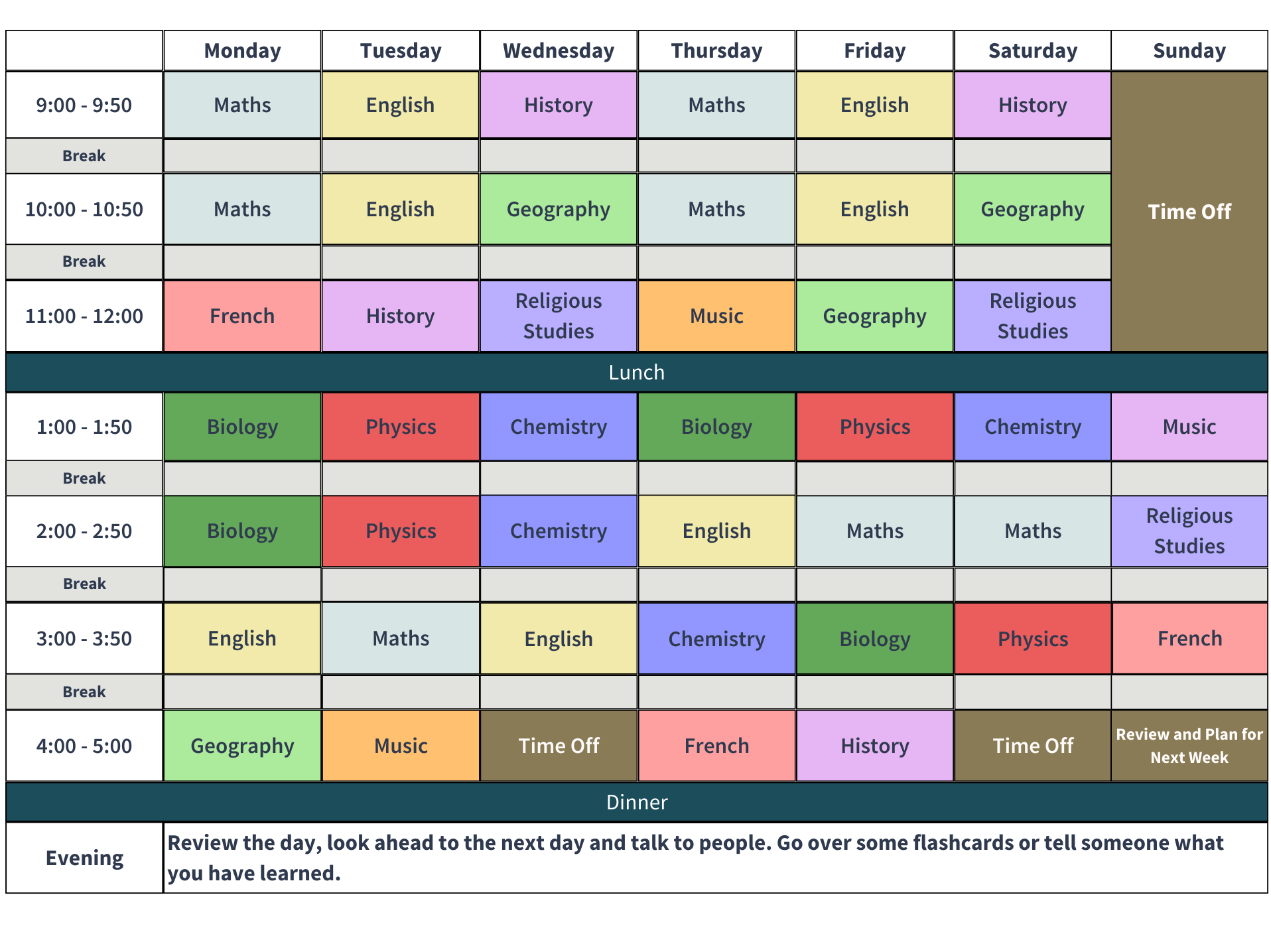
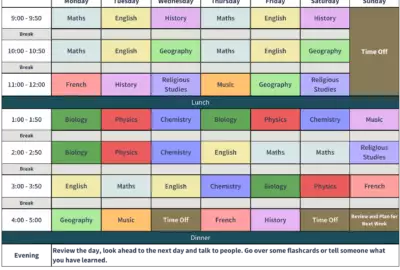
English Literature carries a heavier content load than most subjects: four set texts, around fifteen anthology poems and the unseen skill set. Without a plan, students drift toward the text they enjoy and away from the one costing them marks. Rotate texts across each week rather than spending a fortnight on one, weight extra sessions toward your weakest text, and revisit each text often enough that quotations stay fresh. Short, regular sessions with proper breaks, sleep and time outdoors will beat marathon cramming. Ivy's free GCSE revision timetable template is a practical starting point if you are building a plan from scratch.
Self-study takes most students a long way in this subject, but three things are hard to provide for yourself: honest marking against the assessment objectives, targeted feedback on analytical writing, and a reader who can push your interpretations beyond study-guide level. That outside eye is often the difference between a student stuck at one grade and a student who moves past it. For families who want that structured support, one-to-one GCSE English tuition with a specialist tutor can concentrate revision on the texts and skills where marks are being lost.

Revising for English Literature GCSE comes down to a handful of principles: confirm your board and your set texts, learn short quotations linked to themes, revise actively through retrieval and annotation rather than re-reading, and practise full essays against the mark scheme. The volume is real, but it is manageable when revision starts early and every text gets regular attention. If you would like tailored support, speak to Ivy Education's team about matching your child with a specialist English tutor who knows your exam board inside out.
Two written papers on both AQA and Edexcel. On AQA, Paper 1 covers Shakespeare and the 19th-century novel (1 hour 45 minutes) and Paper 2 covers modern texts and poetry (2 hours 15 minutes). Edexcel pairs Shakespeare with post-1914 literature on Paper 1 and the 19th-century novel with poetry on Paper 2.
No. Both AQA and Edexcel exams are closed book, so you cannot take copies of your set texts into the hall. Extracts and anthology poems named in the question are printed in the paper, but all other quotations must come from memory.
Around ten to fifteen short, flexible quotations per text is a realistic and effective target. Choose quotations that contain an analysable technique and can support several different themes, rather than memorising long passages.
Four set texts: a Shakespeare play, a 19th-century novel, a modern prose or drama text, and a cluster of anthology poems. Most specifications also include unseen poetry. Your school chooses the specific texts from its exam board's list.
Love and Relationships, Power and Conflict, and Worlds and Lives, which was examined for the first time in 2025. Each cluster contains 15 poems, and students study every poem in their chosen cluster.
Build a repeatable routine covering subject, tone, structure, language and effect, then apply it to an unfamiliar poem each week under timed conditions. The skill transfers to any poem, so regular practice removes the element of surprise.
They are two separate qualifications with separate exams. Literature assesses your analysis of studied set texts and unseen poetry, while Language assesses reading and writing skills using unseen non-fiction and fiction extracts, with no set texts to memorise.
Little and often works best. Two to four focused sessions a week from the spring term, rotating between texts, will do more than occasional marathon days, and the load can rise as the exams approach.
Yes, although resits for Literature normally take place in the following summer series. The November resit window is for English Language and Maths only, so students who want to improve a Literature grade usually re-enter the next June.

Alastair Delafield is the Managing Director and founder of Ivy Education.
All Author Posts